
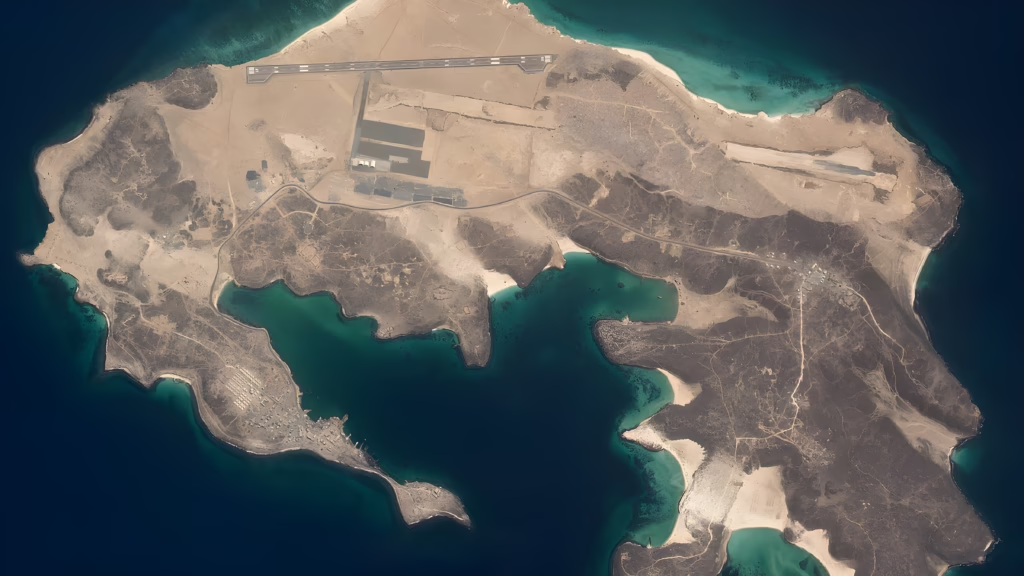
Saudi Arabia shut down one of its mist important oil pipelines on Friday after a drone strike hit the line earlier in the week, just hours after Iran-backed Houthi rebels in Yemen seized a strategic island guarding the mouth of the Red Sea. The twin developments mark a serious escalation in a Middle East war that has already pushed global oil prices back above $100 a barrel and driven up gas and diesel costs for American drivers.
The Saudi energy ministry confirmed the shutdown of the East-West pipeline, saying the closure was a precaution after drones struck the line Thursday morning in the kingdom’s Riyadh and Medina regions. Saudi and Iraqi officials said the drones were launched from Iraq, where Iran-backed militias operate. Iraq’s government responded Saturday by dismissing a military commander.
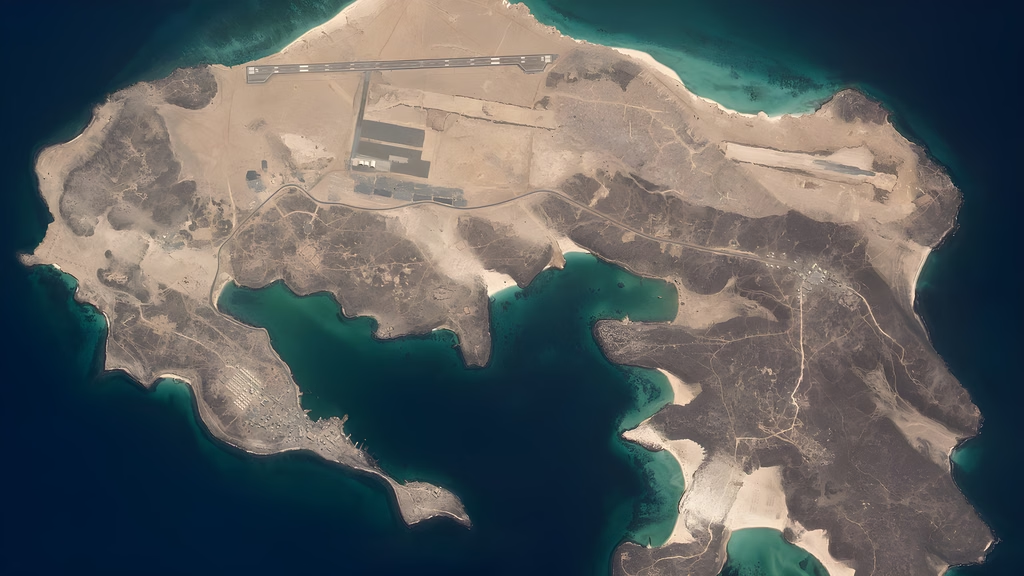
At nearly the same time, four Yemeni government sources told Reuters that Houthi fighters had taken control of Perim Island, also known as Mayun, which sits in the Bab el-Mandeb Strait at the southern entrance to the Red Sea. Analysts and Western officials say the move gives the Houthis their strongest position yet to threaten commercial shipping and Saudi oil exports along one of the world’s most heavily used maritime routes.
Together, the pipeline shutdown and the loss of the island tighten an energy squeeze on both sides of the Arabian Peninsula, at a time when the Strait of Hormuz on the other side of the region already has tanker traffic slowed to a trickle because of the broader U.S.-Iran war. The combination has helped send benchmark oil prices surging, a development that is already being felt at U.S. gas stations and could become a factor in the run-up to November’s congressional elections.
What Happened This Week
The East-West pipeline, also known as Petroline, runs roughly 745 miles (1,200 kilometers) across Saudi Arabia, carrying crude oil from fields near the Gulf coast to the Red Sea port of Yanbu. It has become one of the kingdom’s most valuable pieces of energy infrastructure over the past several months, because it lets Saudi Arabia move oil to global markets without sending tankers through the blocked Strait of Hormuz.
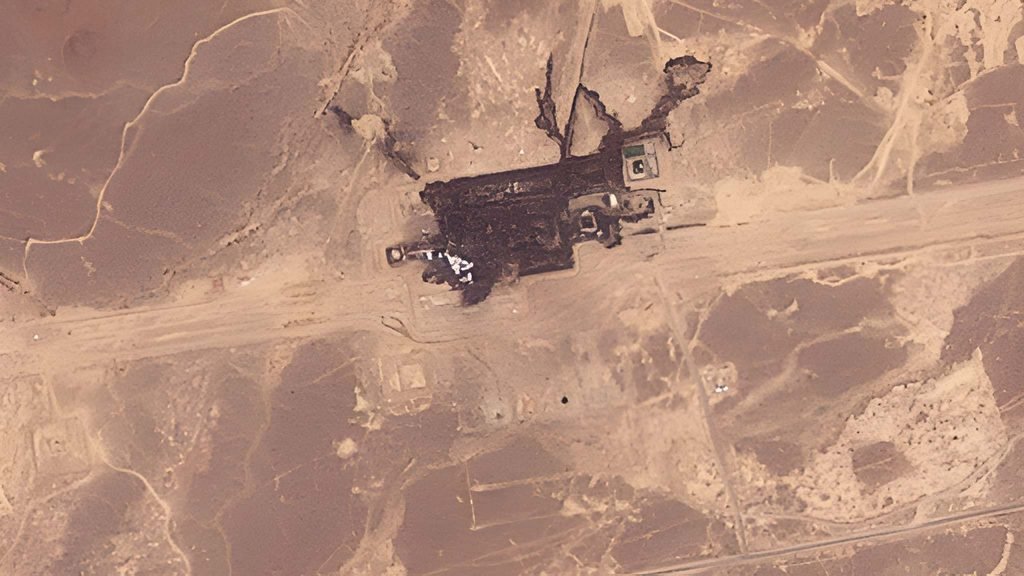
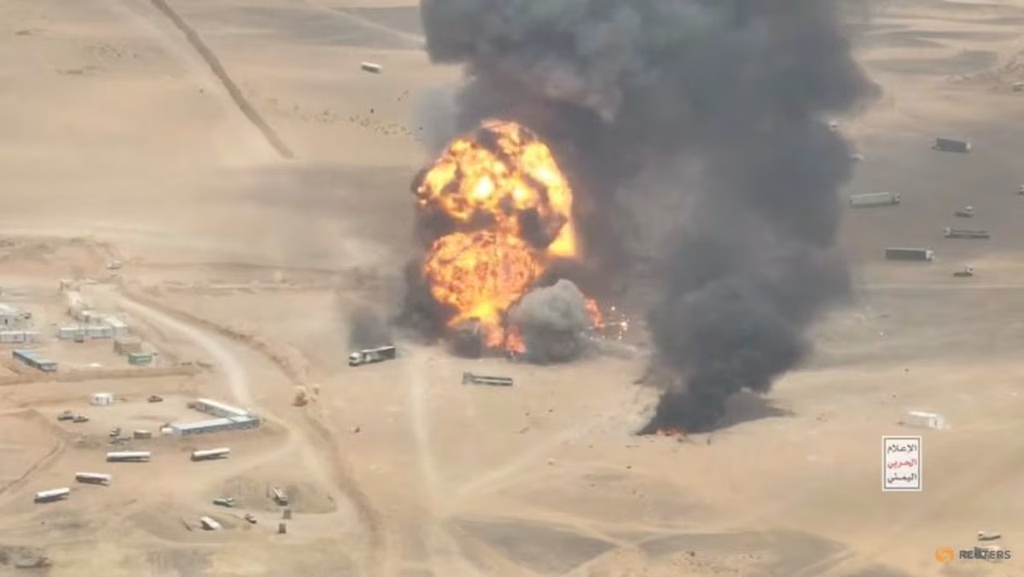
Satellite images taken September 10 showed black smoke rising from a stretch of the pipeline south of Medina, in Saudi Arabia’s Hejaz region. It was not immediately clear who carried out the strike, though Saudi and Iraqi officials pointed to drones launched from Iraqi territory linked to Iran-aligned militias.
Ship-tracking companies and energy analysts say the pipeline has been moving 4 million to 5 million barrels of oil a day in recent months, which amounts to roughly 4% to 5% of the world’s total oil supply. Taking that volume offline, even temporarily, removes a meaningful cushion at a moment when alternative shipping routes are already under strain.
Hours after the pipeline attack became public, word emerged that Houthi forces had effectively completed a rapid push to control Yemen’s Red Sea coastline, capping it with the capture of Perim Island on Friday. The island sits directly in the Bab el-Mandeb Strait, a narrow chokepoint that ships must pass through to move between the Red Sea and the Gulf of Aden.
Why This Matters for global Oil Supplies
Both chokepoints under pressure this week, Hormuz and Bab el-Mandeb, sit on opposite ends of the Arabian Peninsula, and together they normally handle a large share of the world’s seaborne oil trade. Before the wider war began, an estimated 20 million barrels of oil a day, close to one-fifth of global consumption, moved through the Strait of Hormuz alone.
Since fighting between the United States, Israel and Iran escalated earlier this year, that traffic has slowed sharply, forcing Saudi Arabia and other Gulf producers to lean more heavily on overland routes like the East-West pipeline to reach export terminals on the Red Sea. Losing that option, even for a short period, leaves fewer ways to get Gulf oil to the rest of the world without passing through a conflict zone.
Analysts say that is why markets reacted quickly. Oil does not need to be physically blocked to push prices higher. The mere risk that tankers could be delayed, struck or unable to move safely through either strait is enough to raise the cost of shipping insurance and transportation, which in turn feeds into the price of crude itself.
The Numbers Behind the Price Surge
Crude oil prices climbed back above $100 a barrel this week for the first time since July, according to market data and multiple news reports. Brent crude, the international benchmark, gained roughly 9.7% over the course of the week, trading above $100 a barrel as the pipeline attack and the Houthi advance unfolded. U.S. benchmark crude also moved higher, trading in the mid-$90s a barrel.
The price jump has already reached American consumers. Diesel prices climbed to a record high of roughly $5.94 a gallon in recent days, according to Bank of America research cited by Fortune, which pointed to refinery outages in Russia and falling fuel inventories elsewhere as additional pressure on top of the Middle East fighting. Gasoline prices have also risen, arriving just ahead of a closely watched U.S. inflation report.
This is not the first time prices have spiked since the war began. Oil first crossed $100 a barrel in March, the first time it had reached that level in more than three and a half years, after the United States and Israel launched military action against Iran in late February over its nuclear program. Prices have swung considerably since then, trading between roughly $70 and $105 a barrel depending on the state of the fighting and periodic diplomatic efforts.
Not every forecast points toward continued price pain. The U.S. Energy Information Administration recently raised its production forecast for American crude output in 2027 to 14.3 million barrels a day, and the International Energy Agency has projected that weaker global demand could pull consumption down by about 2.5 million barrels a day this year, the sharpest annual drop since the Covid-19 pandemic. Those offsetting forces mean the price path from here is not guaranteed to keep climbing, even if this week’s news pushed prices up sharply in the short term.
What Saudi and U.S. Officials Are Saying
The Saudi energy ministry has been direct about its reasoning, saying it shut the East-West pipeline purely as a precaution following the drone strike, rather than because of confirmed, ongoing damage that would keep it offline indefinitely. Saudi officials have not said when the pipeline might reopen.
On the diplomatic and security front, Saudi Arabia has asked Washington for military help in countering the Houthis, according to two sources familiar with the request, confirming an earlier report from Axios. The United States has told Riyadh it is not willing to take direct military action against the Houthis at this time, the sources said, though talks between the two governments are continuing.
Iraq’s government took its own action Saturday, dismissing a military commander in response to the drone strikes that Baghdad and Riyadh both said originated from Iraqi territory. Iraqi officials have not publicly named the militia or group believed responsible for launching the drones.
Impact on Americans
For U.S. consumers, the most direct effect of this week’s events is likely to show up at the pump and in the cost of shipped goods. Rising diesel prices in particular tend to ripple through the economy quickly, since diesel powers the trucks that move fresh food, furniture, appliances and most other goods across the country. When oil prices rise, the cost of gasoline, diesel and jet fuel typically rises with it, pushing up travel costs and the price of anything that needs to be transported long distances or quickly.
The timing carries political weight as well. Higher fuel prices during the monthslong war have already become a political liability for President Donald Trump and Republican lawmakers ahead of the November congressional midterm elections, with rising costs at the pump a visible, everyday reminder for voters of the war’s economic toll. How the situation in the Red Sea and around the Saudi pipeline develops over the coming weeks could influence how much further that pressure builds before Americans go to the polls.
Background: How the Region Got Here
The current crisis traces back to late February, when the United States and Israel launched a military campaign against Iran aimed at destroying its nuclear program. President Trump argued at the time that short-term economic pain, including higher oil prices, was an acceptable cost if it eliminated what he described as a nuclear threat from Tehran.
In the more than six months since, fighting has repeatedly disrupted the Strait of Hormuz, the narrow waterway between Iran and the Arabian Peninsula that historically carried roughly a fifth of the world’s oil supply. Negotiations over a preliminary deal between the United States and Iran to end the conflict broke down over disagreements about control of the strait. Iran has argued it has the right to set terms for ships passing through waters off its coast, while the United States has pushed to keep the passage free and has used a naval blockade to restrict Iranian ports and tankers.
Iran-aligned Houthi rebels in Yemen, who control large parts of the country and have fought a long-running civil war against a Saudi-backed government, have used the broader instability to expand their reach along Yemen’s Red Sea coast. Their capture of Perim Island this week represents the culmination of that campaign and hands them significant leverage over shipping through Bab el-Mandeb, just as Saudi Arabia was already relying on Red Sea routes to work around problems in the Gulf.
What Happens Next
Diplomacy has not entirely stalled despite the escalation. Iranian state media reported that Tehran plans to meet with Gulf Cooperation Council states in Oman, with top diplomats from the six-member GCC expected to meet their Iranian counterpart as soon as Monday to discuss a possible temporary arrangement for managing shipping through the Strait of Hormuz. It is not yet clear whether any agreement reached there would also address the newer threat posed by the Houthi takeover of Perim Island.
Saudi Arabia has not announced a timeline for reopening the East-West pipeline, and no country has yet claimed responsibility for the drone strikes that triggered the shutdown. Washington’s response to Riyadh’s request for military assistance against the Houthis also remains unresolved, and any change in that position could shape how quickly, or how far, the situation escalates from here.
In the meantime, oil markets and U.S. drivers are likely to stay sensitive to any further news out of the region. Additional attacks, a breakdown in the Oman talks, or a prolonged pipeline closure could all push prices higher still, while a diplomatic breakthrough or a swift Saudi repair effort could ease some of the pressure that has built up over the past week.
What happened to the Saudi oil pipeline?
Saudi Arabia’s East-West pipeline, which carries 4 million to 5 million barrels of oil a day, was struck by drones on September 10 in the Riyadh and Medina regions. Saudi and Iraqi officials said the drones were launched from Iraq. The kingdom’s energy ministry shut the pipeline down as a precaution the next day.
Why is the Saudi oil pipeline attack 2026 significant for oil prices?
The pipeline lets Saudi Arabia move oil around the blocked Strait of Hormuz. Losing that route, even temporarily, removes an alternative at a time when tanker traffic through Hormuz is already slowed by the ongoing war, which is part of why oil prices jumped back above $100 a barrel this week.
What did the Houthis capture in the Red Sea?
Houthi rebels seized Perim Island, also called Mayun, in the Bab el-Mandeb Strait at the southern mouth of the Red Sea. The capture, confirmed by four Yemeni government sources, gives the Houthis a stronger position to threaten shipping through one of the world’s busiest maritime corridors.
How will this affect gas prices in the United States?
Diesel prices have already climbed to a record high near $5.94 a gallon, and gasoline prices have risen as well. Because oil, diesel and gasoline prices tend to move together, further disruptions in the Middle East could keep pushing pump prices higher for American drivers.
Is Saudi Arabia getting U.S. military help against the Houthis?
Saudi Arabia has asked Washington for military assistance in countering the Houthis, according to sources familiar with the request. The United States has told Riyadh it is not willing to take direct military action against the group at this time, though discussions between the two governments are ongoing.
When will the Saudi pipeline reopen?
Saudi officials have not given a timeline for reopening the East-West pipeline. The energy ministry described the shutdown as a precautionary measure rather than a response to confirmed long-term damage, but no restart date has been announced.
Is there any diplomacy underway to calm the situation?
Yes. Iranian state media has said Tehran plans to meet with Gulf Cooperation Council states in Oman, with talks between GCC diplomats and their Iranian counterpart expected as soon as Monday, focused on a possible temporary arrangement for shipping through the Strait of Hormuz.
How does this connect to the broader U.S.-Iran war?
The pipeline attack and the Houthi advance are the latest developments in a conflict that began in late February, when the U.S. and Israel launched strikes against Iran’s nuclear program. The war has repeatedly disrupted the Strait of Hormuz and kept oil prices elevated and volatile for more than six months.




One thought on “Saudi Oil Pipeline Attack 2026: Houthis Seize Red Sea Island as Prices Surge Toward $100 a Barrel”