
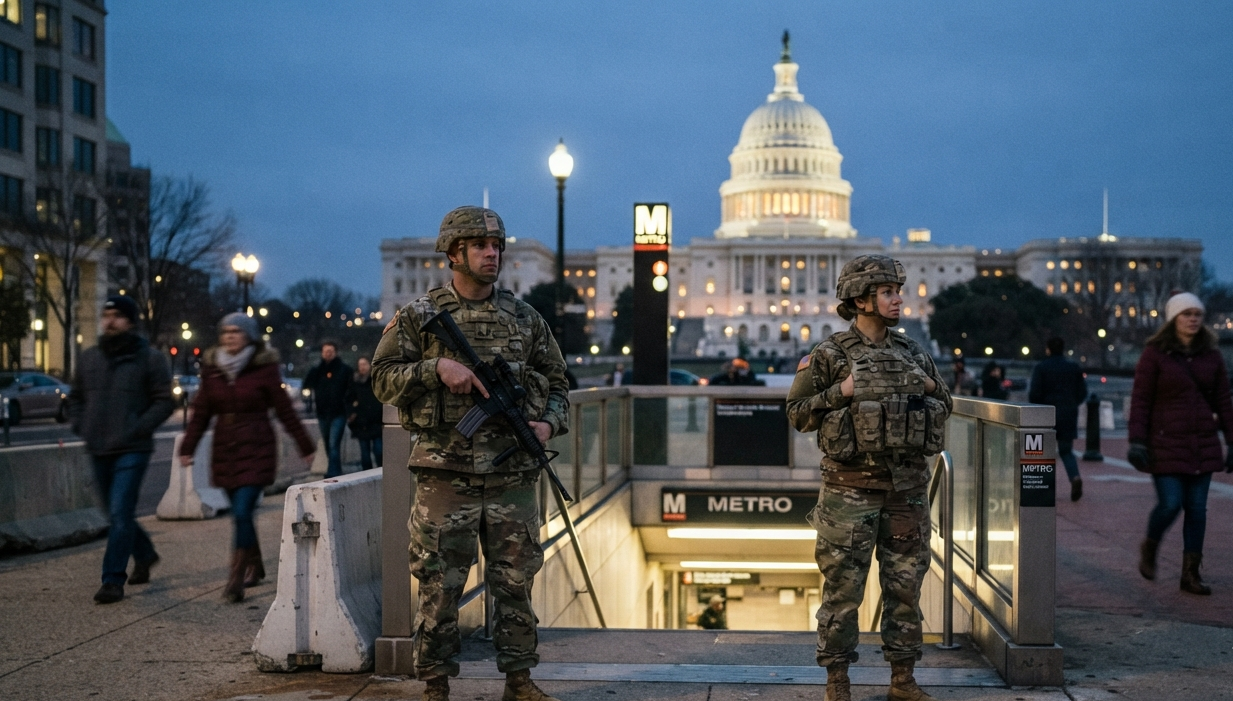
Thousands of National Guard troops have been patrolling the streets of Washington, D.C., for a full year. But a new review of court records shows the soldiers are almost never involved in the criminal cases that make it to court.
A Reuters investigation examined every publicly available charging document filed in the Superior Court of the District of Columbia, the court that handles nearly all criminal cases in the city. Reporters found that National Guard soldiers were mentioned in only about 1.3% of those cases since the troops arrived last August. In some of those cases, the soldiers were not the ones stopping crime at all. They were the victims.
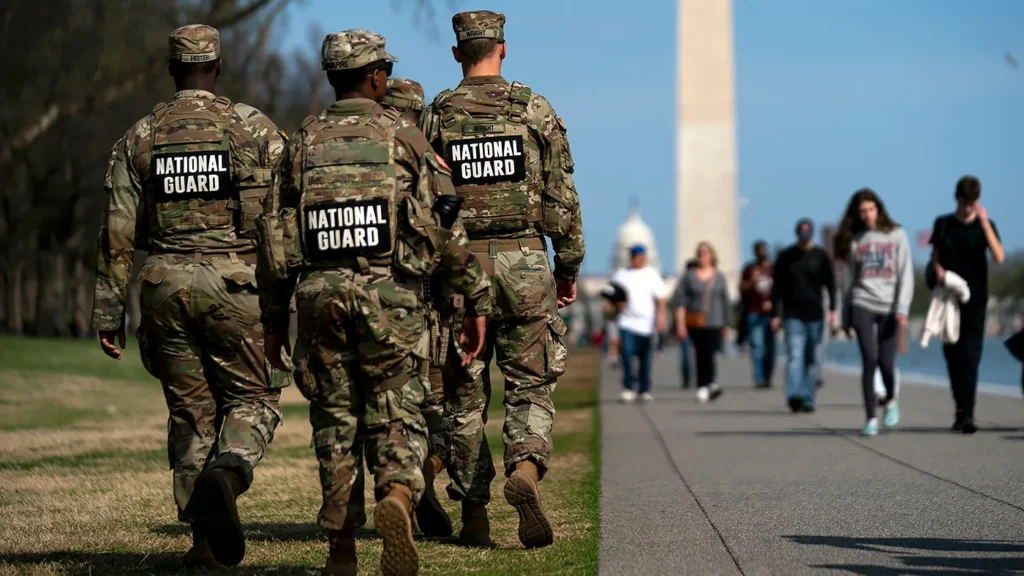
The findings raise new questions about the National Guard Washington D.C. deployment, which President Donald Trump ordered last summer as part of a broader push to crack down on crime in cities led by Democrats. The White House has defended the mission, saying it has improved safety and quality of life in the capital. Critics, including some residents and outside researchers, say the review shows the soldiers are mostly a visible presence rather than an active crime-fighting force.
What the Reuters Review Found from National Guard Washington D.C.
Reuters identified 217 criminal cases in Washington where police paperwork mentioned National Guard involvement. In about 62 of those cases, soldiers stopped a suspect on their own, often for low-level offenses like shoplifting or skipping a subway fare. In another 43 cases, soldiers helped police make an arrest.
Many of the incidents involving soldiers were minor. Court records reviewed by Reuters describe soldiers stopping a man who tried to pay for two pizza slices with $2, detaining someone who threw a rock at a bus, and holding a woman accused of drinking a bottle of root beer without paying for it. In one case, soldiers stopped a man accused of taking two beef jerky sticks worth about $7 from a pharmacy.
The soldiers have also served as witnesses rather than enforcers in some cases. Court records describe at least 35 instances where troops simply observed situations, such as a drug deal or a person exposing himself to a transit officer, and later reported what they saw to police.
Where the Soldiers Are-and Where They Aren’t
One of the most striking parts of the Reuters review involves location. Reporters compared the neighborhoods where soldiers appeared in court records with the city’s crime data and demographic information.
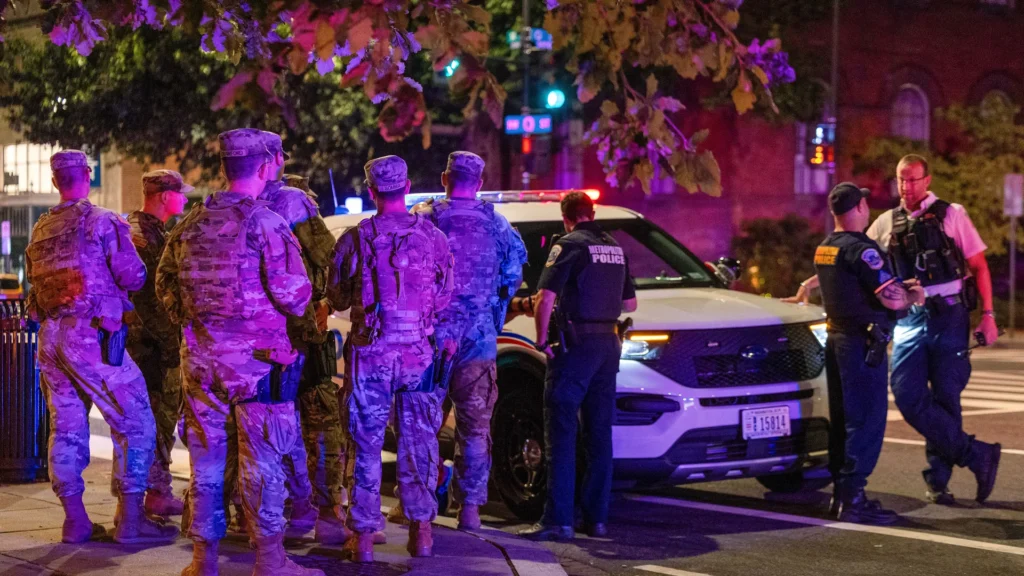
The analysis found that soldiers were more often linked to arrests in wealthier parts of Washington with more college graduates and a larger white population, mostly near the city’s downtown core and subway stations. Reuters found no mention in court records of soldiers doing law enforcement work in the neighborhoods where about 82% of the city’s 859 murders took place over the past five years.
That gap matters because Trump has repeatedly described the deployment as a direct response to violent crime in the capital. The court-record analysis suggests the troops’ day-to-day presence has been concentrated away from the areas that have experienced the most serious violence.
The Cost of the Deployment in National Guard Washington D.C.
The National Guard Washington D.C. mission is not cheap. About 4,500 soldiers are currently deployed in the city, more than the roughly 3,200 officers on the Metropolitan Police Department. The Trump administration told Congress last year that the deployment cost about $1.65 million a day before the number of troops was doubled this summer, pushing costs higher. By comparison, the city’s own police budget runs about $1.5 million a day.
The administration has told Congress it intends to keep soldiers in Washington through the end of Trump’s presidency in 2029, at a projected cost of $1.4 billion. Officials have not said exactly how many troops will remain deployed over that time.
What Officials on Both Sides Are Saying
The White House did not answer specific questions from Reuters about the soldiers’ daily work. A White House spokeswoman, Lauren Bis, said Trump’s efforts in Washington have reduced crime, improved the city’s appearance, and made life better for many residents.
D.C. Mayor Muriel Bowser, who has previously called the deployment “problematic,” declined to comment for the story, as did the city’s police department. The National Guard task force overseeing the mission also did not answer questions about its work or its costs, though a spokeswoman said soldiers were too busy for interviews.

Supporters of the deployment argue that a visible military presence discourages crime even without direct arrests. A senior fellow at the Heritage Foundation, a group that has backed the Trump administration’s approach, compared the troops to a police car that makes drivers slow down simply because it’s there.
Critics, including a retired Army general who once served as second-in-command of the National Guard Bureau, argue that soldiers are not trained for police work and cost more than simply hiring additional officers. Some Washington residents interviewed by Reuters said the soldiers make them feel less safe, not more, describing the deployment as an unusual show of force for the nation’s capital.
What the Crime Number Actually Show
Measuring the deployment’s real effect on crime is complicated. Alongside the National Guard, the Trump administration also sent hundreds of additional federal agents into Washington, who have been doing work similar to local police officers. That makes it hard to separate the impact of soldiers specifically from the impact of the broader federal presence.
Washington’s murder count fell for a third straight year during the deployment. However, murders also dropped over the same period in cities that did not receive National Guard troops or extra federal agents, suggesting the decline may not be tied only to the deployment. Meanwhile, the total number of violent crimes reported by city police – including serious assaults, robberies, and sex offenses – was about 4% higher between January and mid-August compared with the same period last year.
A study published in May by the nonpartisan Niskanen Center found that the deployment was linked to a drop in car thefts but had no measurable effect on violent crime overall.
Soldiers as Crime Victims
The Reuters review also found dozens of cases in which soldiers themselves were targeted. Reporters identified 62 cases in which people were charged with pushing, punching, or threatening National Guard members, including nine cases involving spitting on a soldier. In one case, a man was charged after allegedly trying to grab a soldier’s pistol during an arrest attempt.
The risks to service members were highlighted last year when two soldiers from West Virginia were shot near the White House, an attack that killed one of them.
What Happened in National Guard Washington D.C.
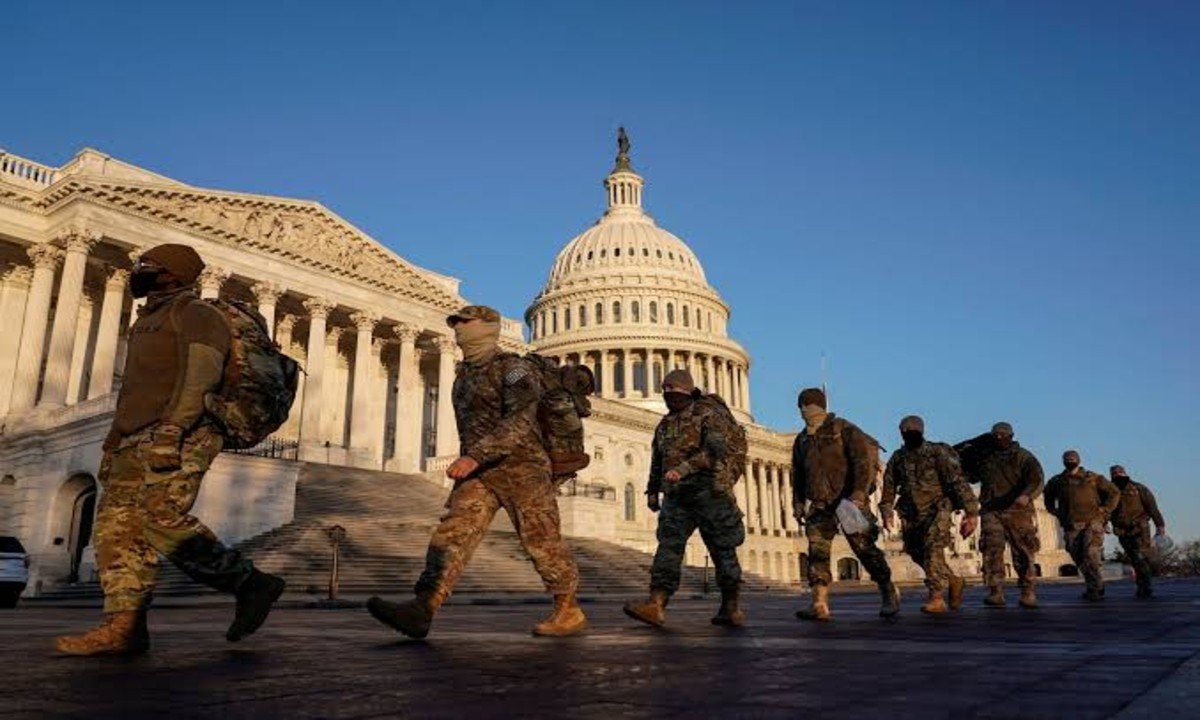
The Trump administration has said it plans to continue the National Guard Washington D.C. deployment for years, through the end of the president’s term in 2029, though the exact troop levels going forward have not been disclosed. Whether the mission’s scope or approach changes may depend on how officials respond to continued scrutiny of its cost and its measurable impact on crime.
For now, the available court records suggest that most of the soldiers’ documented interactions with the criminal justice system involve minor offenses or routine patrols rather than the serious, violent crime that was cited as the original justification for sending troops to the capital.
How many National Guard troops are deployed in Washington, D.C.?
Roughly 4,500 National Guard soldiers are currently deployed in the city, Which is more than the approximately 3,200 officers on the Metropolitan Police Department. The number of troops was doubled earlier this summer after starting at a lower level last August
How much does the National Guard Washington D.C. deployment cost?
The Trump administration told Congress the deployment cost about $1.65 million per day before this summer’s troop increase. The city’s own police budget is about $1.5 million per day. Officials plan to continue the deployment through 2029 at a projected total cost of $1.4 billion
Do National Guard soldiers in Washington make arrests?
Soldiers have limited law enforcement authority. They can detain suspects but must call city police to make a formal arrest. Reuters found soldiers were mentioned only about 1.3% of criminal cases filed in D.C. Superior Court since their deployment began
Has crime in Washington gone since the deployment began?
Murders fell for a third straight year during the deployment, but they also declined in cities without similar troop deployments. Overall violent crime reported were about 4% higher this year through mid-August compared with the same period last year
Where do National Guard Washington D.C. soldiers mostly patrol in Washington?
Court records show soldiers were more often linked to activity in wealthier, whiter neighborhoods near downtown and subway stations. Reuters found no record of soldiers doing law enforcement work in the neighborhoods where most of the city’s murders occurred over the last five years
The Fastest Route to Secure Hashes https://btcrecovery.pages.dev