
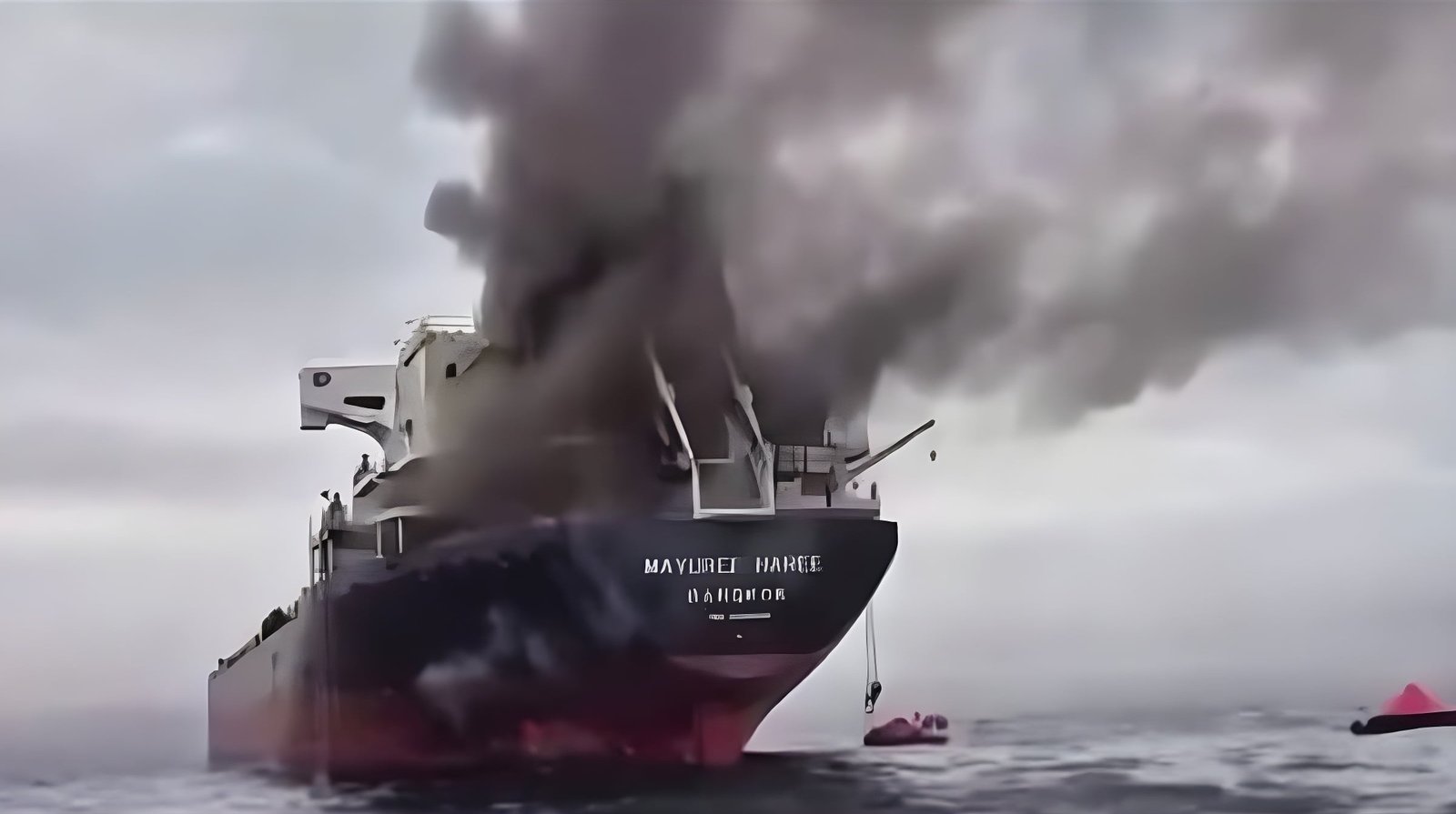
Two oil tankers were struck by unknown projectiles in the Strait of Hormuz late Monday, the latest sign that the US-Iran war, now six months old, has slipped back into active fighting after weeks of relative calm. President Trump said Monday he is weighing further strikes on Iran, even as his administration pushes a newly announced economic pressure campaign.
The Strait of Hormuz tanker attacks come just days after the U.S. carried out its first strikes on Iran in a month, hitting rocket launchers on Iran’s Larak Island. Iran responded with missile and drone attacks on U.S. allies Jordan and the United Arab Emirates, and separately claimed, falsely according to U.S. Central Command, to have struck a tanker with sea mines.
Oil prices have jumped for two straight days on fears the conflict is escalating again, and gas prices at home remain above $4 a gallon nationwide. Here’s what to know about the latest round of fighting, the tanker attacks, and where diplomacy currently stands.
What Happened in the Strait of Hormuz
Two crude oil tankers were hit by unidentified projectiles within minutes of each other late Monday while transiting the Strait of Hormuz, according to the Greece-based maritime risk firm Marisks. A Saudi-flagged tanker, the Sidr, was struck first, followed roughly eight minutes later by the Senegal Prosperity, a Liberia-flagged, South Korean-owned crude carrier operated by Sinokor Maritime.
The U.K. Royal Navy’s Maritime Trade Operations Center, known as UKMTO, confirmed it received a report of an incident 17 nautical miles east of Khasab, Oman, in which a tanker reported being struck by three unknown projectiles. Marisks said the near-simultaneous timing of the two strikes suggests “a coordinated or closely related series of attacks rather than isolated events.” No casualties or environmental damage were reported in either incident.
Both ships were traveling through the so-called southern corridor near Oman’s coastline, a route the Trump administration has repeatedly said is safe and open for commercial traffic. Marisks said the attacks “further undermine any assumption” that this southern route is meaningfully safer than the northern passage Iran has demanded ships use instead.
How the Latest Round of Fighting Started
This flare-up traces back to Sunday, when U.S. forces struck two Iranian rocket launchers on Larak Island, a small island in the Strait of Hormuz just off Iran’s coast. U.S. Central Command spokesman Capt. Tim Hawkins said Islamic Revolutionary Guard Corps forces had been observed preparing to launch rockets and deploy sea mines into the strait.
Iranian state media reported that the strike killed two people and wounded several others near Larak Island. In response, Iran’s Revolutionary Guard Corps said it launched ballistic missiles at the King Hussein and Al-Azraq air bases in Jordan and separately targeted U.S. military personnel at a base in the United Arab Emirates, along with claiming it shot down a U.S. drone over the strait.
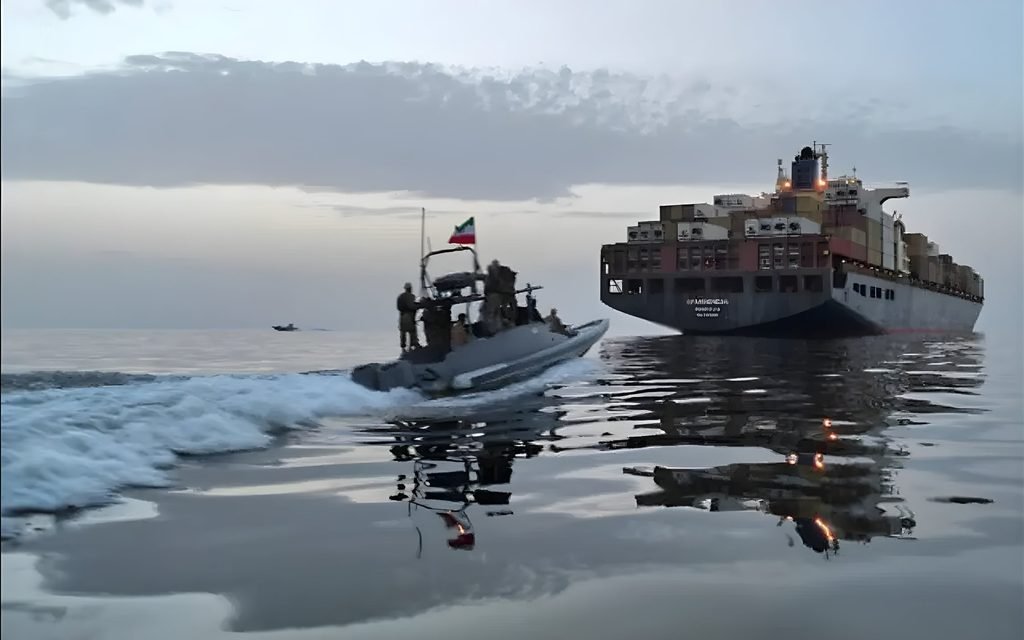
Jordan’s military said it intercepted all eight missiles that entered its airspace, and officials in Jordan and the UAE said the Iranian weapons were intercepted or caused no damage. Qatar’s foreign ministry condemned Iran’s attacks on Jordan and the UAE as “a blatant violation” of their sovereignty and called for “an immediate and complete cessation” of military action.
Iran’s Foreign Ministry defended its response, saying the country’s armed forces “will have no hesitation in exercising their inherent right to self-defense.”
A Disputed Claim and an AU-Generated Video
The exchange of strikes produced two disputed episodes that added confusion to an already chaotic 48 hours.
Early Monday, Iran’s Revolutionary Guard Corps claimed it had struck a supertanker with two naval mines in the strait, causing a fire and forcing it to stop. U.S. Central Command flatly denied the claim hours later, calling it “yet another IRGC attempt to intimidate regional commercial shipping through disinformation” and stating plainly that no ships had hit mines in the strait. UKMTO never corroborated the Iranian claim.
Separately, late Sunday, Trump posted an AI-generated video on his Truth Social platform claiming Iran’s major oil hub, Kharg Island, was being “blown to smithereens.” There was no evidence any such attack had actually taken place, and the head of Iran’s state oil company said Kharg’s operations had not stopped. Vice President JD Vance later told reporters the video was meant to send a message to Iran over its attacks on commercial shipping, warning that there would be consequences if the attacks continued.
Trump Calls It a “Relatively Little War” While Weighing More Strikes
Speaking in the Oval Office Monday, Trump downplayed the scale of the conflict even as he suggested more military action could be coming. “This is a relatively little war for us. This is not a big war,” Trump said, dismissing concerns raised in a Washington Post report that several U.S. military leaders are worried a prolonged Middle East operation could weaken the country’s ability to respond to threats elsewhere.
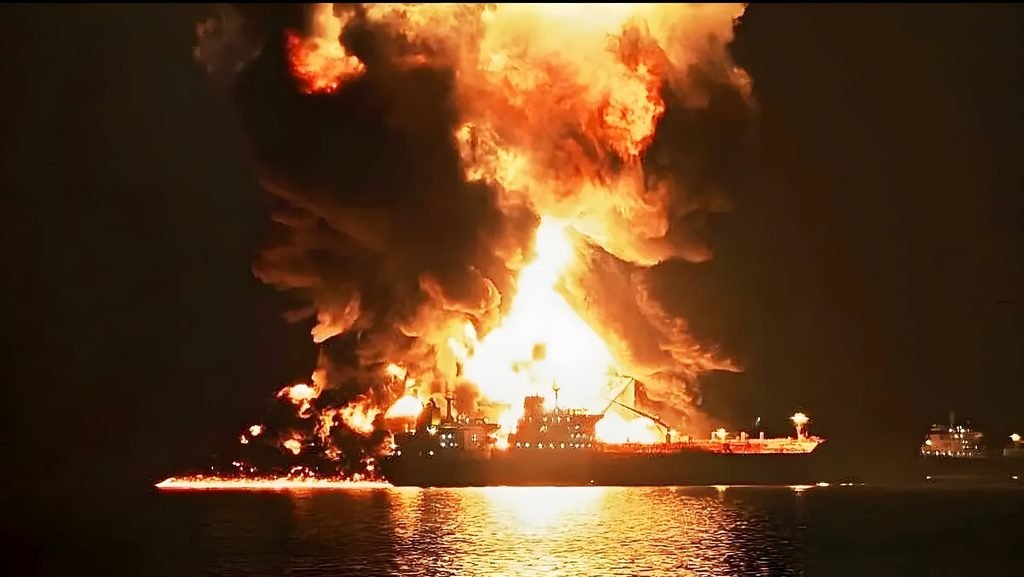
Trump also called Iran a “failed nation” in a separate post Monday morning, writing that the country has no navy or air force and is dealing with severe inflation and internal disarray. He said Iran’s government has killed more than 100,000 protesters and should face war crimes charges, a figure that has not been independently verified by outside organizations tracking the unrest.
By early Monday afternoon, Trump told Fox News’ Trey Yingst in a phone interview that the U.S. would retaliate against Iran’s attacks on Jordan and the UAE, saying simply that a response was coming.
Diplomacy Efforts Continue Despite the Fighting
Even as fighting resumed, diplomatic efforts to end the war have continued on multiple fronts.
Iranian President Masoud Pezeshkian said Tuesday that Iran would take reciprocal action if the United States returns to the terms of a memorandum of understanding the two countries signed in June, which briefly paused hostilities before both sides accused each other of violating it. Pezeshkian made the comment ahead of meetings with Russian President Vladimir Putin and Chinese President Xi Jinping on the sidelines of the Shanghai Cooperation Organization summit in Kyrgyzstan.
Qatar, which has served as a mediator between the U.S. and Iran, said Tuesday it would “intensify” efforts to restart talks, warning that the renewed fighting “will not benefit anyone.” Qatari foreign ministry spokesman Majid Al-Ansari said discussions with mediation partners in Pakistan and Oman are ongoing. The Trump administration has said there are currently no direct talks with Iranian officials and no plans to resume any.
Treasury Secretary Scott Bessent, speaking Monday at a meeting of G20 finance ministers, said the administration’s economic pressure campaign is designed to push Iran back to the table. Bessent said Iran must give up its nuclear program, turn over enriched uranium, end support for regional proxy groups, and reopen the strait before real progress can be made.
What This Means for oil and Gas Prices
The renewed fighting has pushed oil prices higher for a second straight day. International benchmark Brent crude was trading above $92 a barrel early Tuesday, while U.S. crude traded near $88, both up roughly 2% on the day after similar gains Monday. Brent remains well below the more than $100-a-barrel levels seen in April, but is elevated compared to early August, when prices had dropped below $80.
U.S. stock markets also felt the impact Monday, with the S&P 500 falling 0.3%, the Dow Jones Industrial Average dropping 374 points, and the Nasdaq slipping slightly, though all three indexes still closed August with monthly gains.
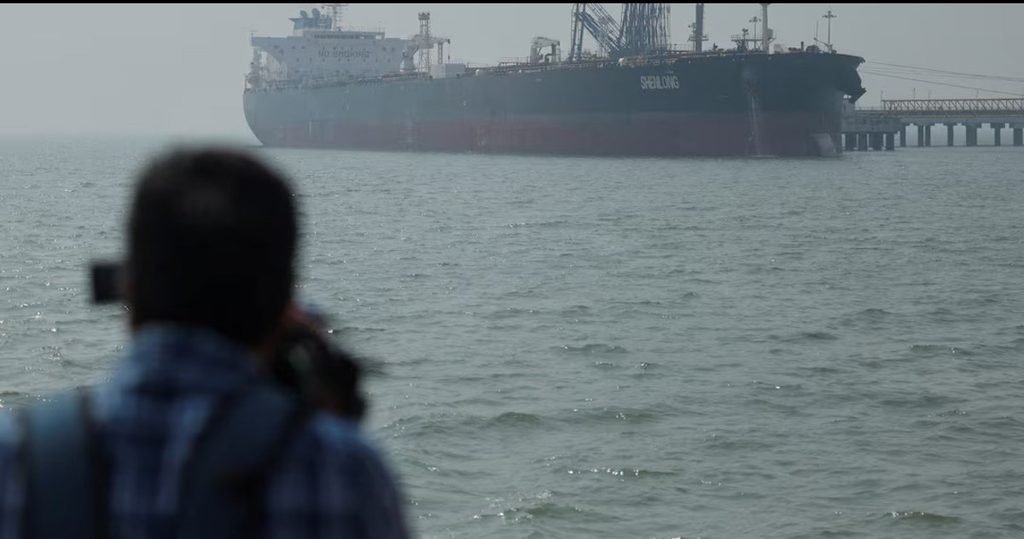
At home, the average price of gas remains above $4 a gallon nationwide, according to AAA. Trump is scheduled to meet Tuesday with oil refiners and distributors, along with Interior Secretary Doug Burgum and Energy Secretary Chris Wright, to discuss ways to boost domestic refining capacity. The meeting follows a separate deal Trump announced with Venezuela last week for access to roughly 65 billion barrels of oil, though energy experts have told CBS News that deal is unlikely to lower gas prices in the near term.
The Toll on U.S. Troops and Their Families
The renewed fighting adds to what has already been a demanding deployment for thousands of U.S. troops stationed in the Middle East. According to a letter obtained by CBS News and confirmed by two U.S. officials, family members of soldiers in the Army’s 82nd Airborne Division were told their deployments will now last up to 12 months, stretching into 2027.
Division leaders wrote in the letter, dated Sunday, that they understood a longer tour weighs heavily on military households.
Why This Matters for Americans
Six months into the US-Iran war, the conflict remains largely at a standoff over control of the Strait of Hormuz, even as fighting periodically flares up, as it has this week. That standoff continues to affect Americans directly through elevated gas prices, financial market volatility, and extended military deployments for U.S. troops and their families.
With midterm elections approaching in November, gas prices and the war’s overall trajectory are likely to remain politically significant issues for the Trump administration heading into the fall.
What Happens Next
As of Tuesday morning, no new U.S. strikes on Iran had been confirmed following Trump’s statement that a response was coming. Diplomatic channels through Qatar, Pakistan and Oman remain active, even though the Trump administration says there are no direct talks currently underway with Iranian officials.
The number of ships transiting the Strait of Hormuz remains at less than half of pre-war levels despite U.S. military escorts for some vessels, and further attacks on shipping remain a possibility given the events of the past several days. Analysts caution that while neither side appears to be seeking a full return to sustained conflict, the situation remains fragile enough that renewed escalation could happen quickly.
What happened in the Strait of Hormuz this week?
Two oil tankers, a Saudi-flagged vessel called the Sidr and a South Korean-owned tanker called the Senegal Prosperity, were struck by unknown projectiles within minutes of each other late Monday while transiting the strait. No casualties or environmental damage were reported.
Why did the US strike Iran again?
U.S forces struck two Iranian rocket launchers on Larak Island on Sunday after officials said Islamic Revolutionary Guard Corps forces were preparing to launch rockets and deploy sea mines into the Strait of Hormuz. It was the first U.S. strike on Iran in about a month.
How did Iran respond to the U.S. strikes?
Iran’s Revolutionary Guard Corps said it launched ballistic missiles at two air bases in Jordan and targeted U.S. military personnel at a base in the United Arab Emirates. Officials in both countries said the Iranian weapons were intercepted or caused no damage.
3 Replies to “Iran War Latest: 7 Critical Updates on Strait of Hormuz Tanker Attacks”