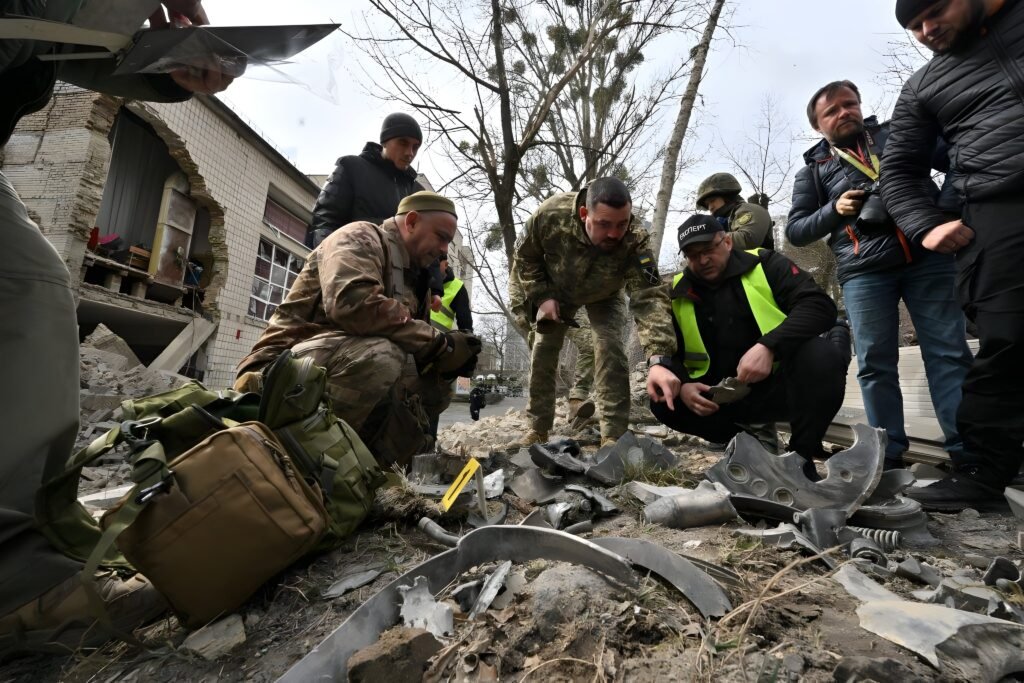
Ukraine is moving classrooms and hospital wards underground as Russian drone and missile attacks continue almost nightly. Ukraine’s Education Ministry says 124 underground schools were operating as of September, and Prime Minister Serhii Koretskyi has set a goal of about 200 by the end of 2026.
The shift, first reported in detail by ABC News on Thursday, shows how the war is changing everyday life as it nears its fifth anniversary with no peace settlement in sight. Local officials and charities are building shelters, learning spaces, and medical facilities designed to keep civilians safe from long-range strikes.
A deadly attack on November 2 in the Zaporizhzhia region, however, showed that going underground does not guarantee safety. Ukrainian officials say 72 people were killed when Russian aircraft bombed a school building that was being used as an aid distribution point.
Ukraine Underground Schools by the Numbers
Ukraine’s Education Ministry told ABC News that the 124 underground schools open as of September can hold about 50,000 children at once, or roughly 100,000 if classes run in two shifts. In a speech in August, Koretskyi said the government is building these schools and hoped to have about 200 by year’s end. He also said 1 billion hryvnia was set aside this year for shelters in kindergartens.
The ministry also gave other figures to the Ukrainian news outlet UNN. In 2026, the government has funded 113 school shelters through a subsidy of more than 1.5 billion hryvnia, and 33 of those had been completed as of late September. The state budget set aside 6 billion hryvnia in total for shelters this year, with 5 billion for general secondary schools. The ministry also said 1,349 schools were operating only remotely.
The greatest concentration of underground schools is in frontline and nearby regions, where safety concerns make in-person classes hardest to hold, the ministry said. Putting children back in physical classrooms is a key reason for the program.
A Classroom in a Basement
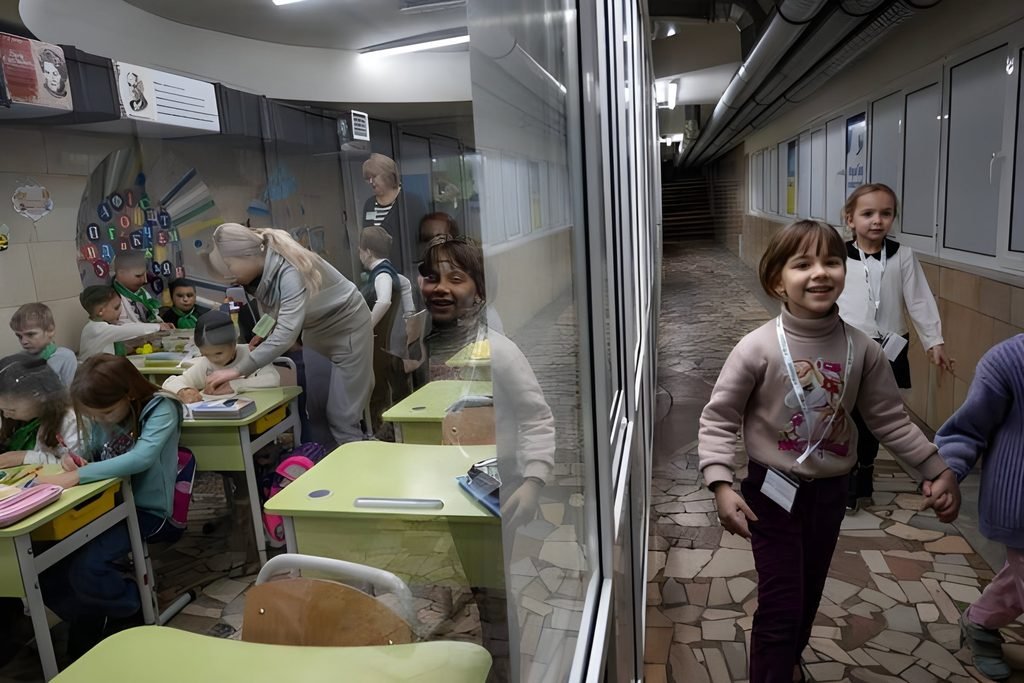
One example is Gymnasium No. 70 in Kryvyi Rih, a central Ukrainian city that is also the hometown of President Volodymyr Zelenskyy. A charity called the City Development Charitable Foundation turned a disused utility basement under the school into substitute classrooms, art spaces, and areas for art therapy. Children can learn and shelter there while Russian drones and missiles target the city above.
The charity’s director, Mariia Kulyniak, told ABC News the project took about a year because the group had to find funding. She said the most meaningful result is that children now come to the space out of interest, not just to hide from danger.
“We do not want our children to spend their childhood underground,” Kulyniak said. She added that as long as the danger continues, the charity has a responsibility to offer protection along with learning and creativity.
Hospitals Are Following
Officials say they also plan to expand underground medical facilities. One is planned in the frontline Kharkiv region and would hold up to 2,000 patients, ABC reported.
Denys Ostrovskyi, CEO of the construction company Stroinvest, told ABC that underground hospitals have grown from simple shelters beneath existing buildings into fully functioning medical facilities. His company is working on what he calls bunker-type hospitals with concrete walls about 5 to 7 feet thick and overhead concrete about 7 feet thick. One project would sit more than 65 feet underground, with layers of earth for extra protection.
Ostrovskyi said such hospitals will have their own storage and power sources so they can run around the clock during attacks. He argued that buildings should now be designed with possible future threats in mind, even in peacetime.
Nightly Life in the Shelters
For many Ukrainians, going underground is already routine. ABC reported that every night, people walk familiar routes to the nearest shelter as drones and missiles head toward targets. In Kyiv, thousands of people are believed to shelter in the metro each night. During a major Russian attack in July, local officials said more than 54,000 people took cover in metro stations.
The issue has become political. ABC reported that Zelenskyy and Kyiv Mayor Vitali Klitschko have publicly traded accusations over who has failed to provide enough protection for residents or to strengthen critical facilities like water and energy systems.
Kherson: Building Under Fire
The challenge is greatest near the front line. In the southern Kherson region, which is split between Russian and Ukrainian control along the Dnipro River, local authorities face daily attacks from artillery, small first-person-view drones, larger Shahed-type strike drones, and missiles.
Regional data shared with ABC shows more than 47,000 buildings have been damaged or destroyed. A regional spokesperson said a firm cost estimate is impossible while fighting continues. Kherson currently has 13 underground schools and 16 underground hospitals, with seven more schools and 13 more medical facilities under construction. The region has 820 civil defense facilities available to residents.

Authorities are also protecting energy sites with mesh walls, concrete barriers, and anti-drone nets, and are moving power and communication lines underground. Generators and solar panels with large batteries are being added to handle outages.
Danger is constant. Humanitarian worker Natalia Sergienko told ABC that her group often watches intercepted video feeds from circling drones to know when to hide. She said construction itself is risky, and that a missile destroyed one underground school in her city while it was being built. She believes such projects may only resume safely after the war ends.
The Limits of Going Underground
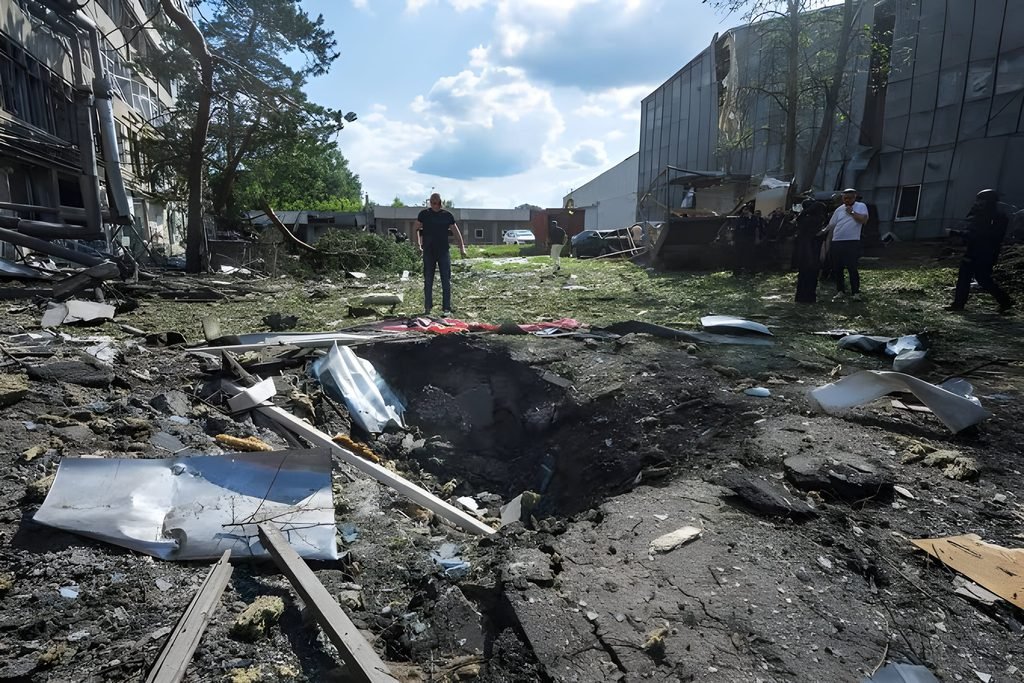
The November 2 attack on Komyshuvakha, in the Zaporizhzhia region, is the clearest warning. Dozens of people had gathered to collect aid at a distribution point beneath a school. Ukrainian authorities say Russian aircraft dropped glide bombs on the site, killing at least 72 people and leaving four missing. Search operations ended after two weeks, according to Ukrainian officials cited by UNITED24 Media.
Reports from Ukrainian and international outlets say at least nine glide bombs, each carrying around 3,000 pounds of explosives, hit the village. Ukrainian officials say the school was hit first, then the shelter below it. Russia’s Defense Ministry did not issue a statement on the attack, ABC reported, and Russian officials did not publicly comment.
The UN Human Rights Monitoring Mission in Ukraine said the attack showed the devastating effect of glide bombs in populated areas. It noted that the time and place of the aid distribution had been publicized in advance. Before the attack, the UN mission said, glide bombs had killed at least 478 civilians and injured 2,667 in Ukraine in 2026, about 16% of all verified civilian casualties.
Ukraine’s UN ambassador, Andriy Melnyk, said the attack shows the limits of some underground shelters against powerful munitions. Kulyniak said the tragedy shocked her group in Kryvyi Rih. Because of it, she said, many people are now afraid to come to its warehouse for aid, so it is delivering help in neighborhoods and trying to limit how long people gather in one place.
One detail adds context: UNN reported that an underground school had operated at the Komyshuvakha site until February 2026, but the space struck in November was being used as an aid distribution point, not a school.
The Code of Rebuilding
The cost of rebuilding is already enormous. A joint report in February 2026 from the Ukrainian government, the World Bank, the European Commission, and the United Nations estimated that reconstruction would cost nearly $588 billion over the next decade if it began today. Other estimates are higher, and ABC noted that the figures are expected to rise the longer the war lasts.
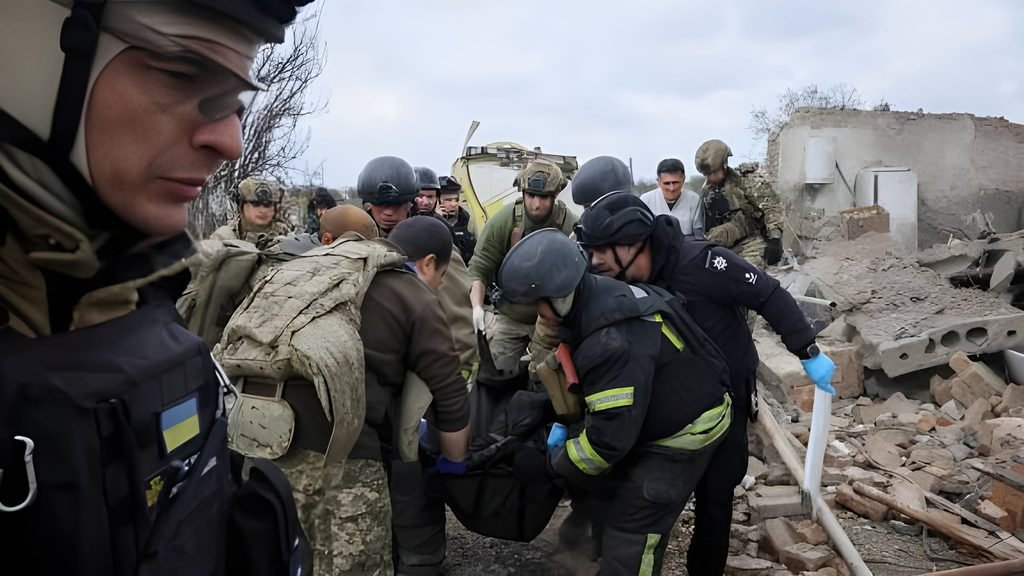
Officials say rebuilding will reflect lessons from the invasion, which has seen Russian forces repeatedly hit infrastructure, hospitals, schools, and supermarkets. Ukrainian officials are also looking abroad. ABC reported that members of the Lviv regional administration recently visited Switzerland, which is widely seen as a leader in underground infrastructure.
What This Means for Readers
For Americans, the story is a window into how the war is changing civilian life in Ukraine. The report also shows the scale of the money involved in reconstruction. Much of the cost estimate comes from international organizations and institutions, not just Ukraine’s government. Beyond that, ABC’s reporting did not discuss specific U.S. funding or policy, and this article does not speculate on it.
What Happens Next
The government’s immediate target is about 200 underground schools by the end of 2026. That would require dozens more to open in the coming weeks and months, though the ministry has not said how close it is as of late November. Construction in frontline areas like Kherson remains slow and dangerous.
Officials also plan more underground medical sites, including the large facility in Kharkiv. Meanwhile, ABC noted that regional authorities and charities are preparing safe spaces for both a continuing war and an uncertain peace. No ceasefire or peace agreement is in place, and no timeline for one has been reported.
How many underground schools does Ukraine have?
Ukraine’s Education Ministry says 124 underground schools were operating as of September, with a capacity of about 50,000 children, or 100,000 with two shifts. Prime Minister Serhii Koretskyi said the goal is about 200 Ukraine underground schools by the end of 2026.
Why is Ukraine building schools and hospitals underground?
Russian drones, missiles, and glide bombs regularly strike Ukrainian cities, including infrastructure, schools, and hospitals. Underground spaces give children a way to attend in-person classes and give patients protection. Officials also expect the threat to last, so they want long-term protection.
What happened in Komyshuvakha?
On November 2, Russian aircraft dropped glide bombs on a school building in Komyshuvakha, in the Zaporizhzhia region, where residents had gathered for aid. Ukrainian authorities say 72 people were killed and four are missing. Russia’s Defense Ministry did not issue a statement, according to ABC.
How deep are the new underground hospitals?
Construction company Stroinvest says some bunker-style hospitals have concrete walls 5 to 7 feet thick and overhead concrete about 7 feet thick. One planned facility would sit more than 65 feet underground, with earth layers on top for extra protection.
How many people shelter in Kyiv’s metro each night?
ABC reported that thousands of people are believed to shelter in Kyiv’s metro system each night. During a major Russian attack in July, local officials said more than 54,000 people took cover in the stations.
How much will Ukraine’s reconstruction cost?
A February 2026 joint report by the Ukrainian government, the World Bank, the European Commission, and the United Nations estimated nearly $588 billion over the next decade if rebuilding began today. Other estimates are higher, and totals are expected to rise as the war continues.
Is a peace deal in sight?
No. ABC reported that the war is approaching its fifth anniversary with no peace settlement in sight. The reports reviewed for this article did not describe any scheduled ceasefire or peace agreement.