
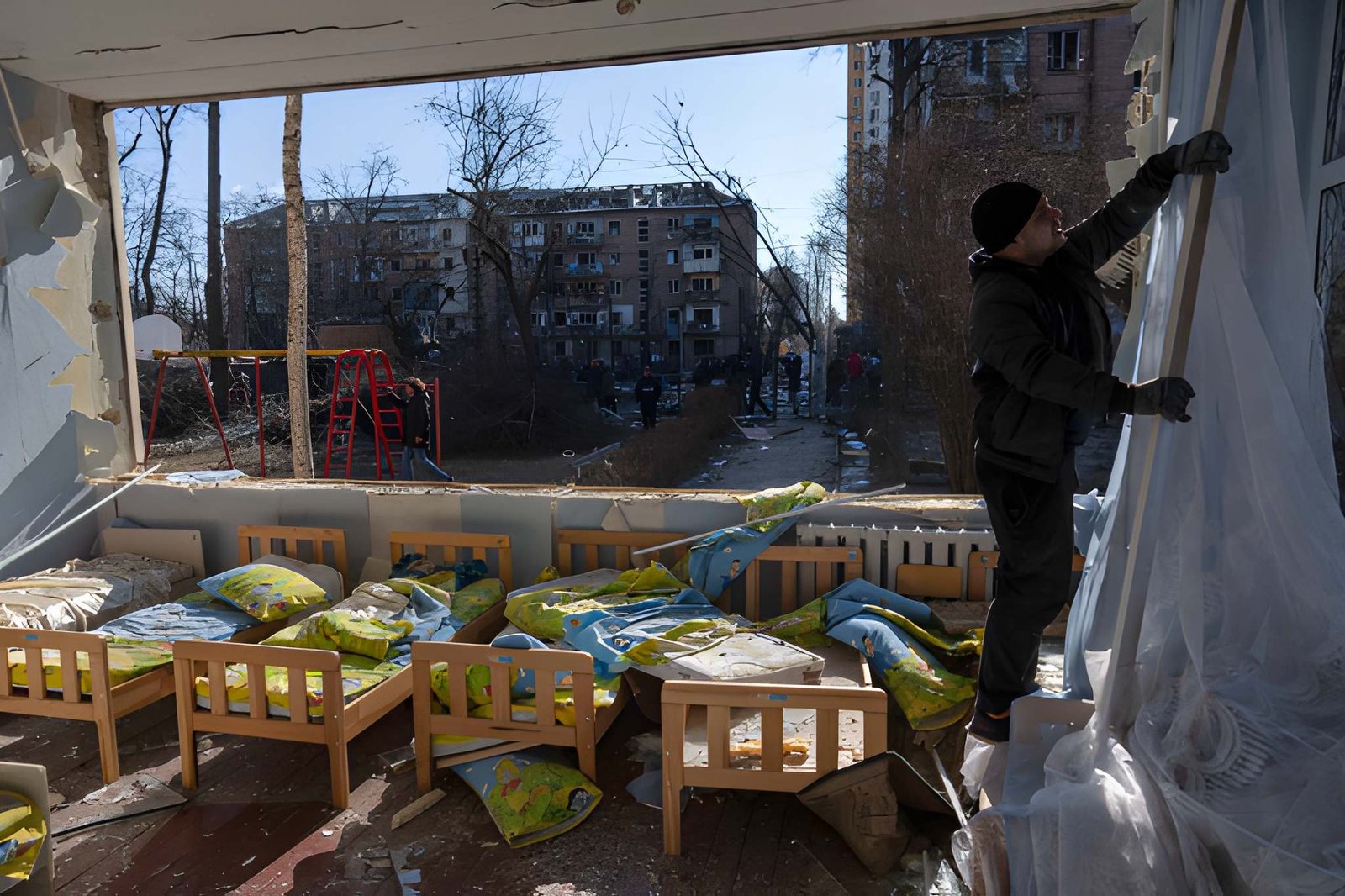
As Ukraine’s children returned to class this week, some walked down a set of stairs, through steel blast doors, and into classrooms built more than 20 feet below ground. In Kharkiv, a newly built underground school called Lyceum No. 24 opened with space for 1,000 students, giving families in one of Ukraine’s most heavily bombarded cities a way to keep their kids learning in person, safely below the surface.
The Ukraine underground school effort reflects a wider shift happening across the country as the war with Russia enters its fifth year with no clear end in sight. In Kharkiv alone, thousands of children now attend class underground, either in purpose-built bunker schools or in classrooms built directly into subway stations.
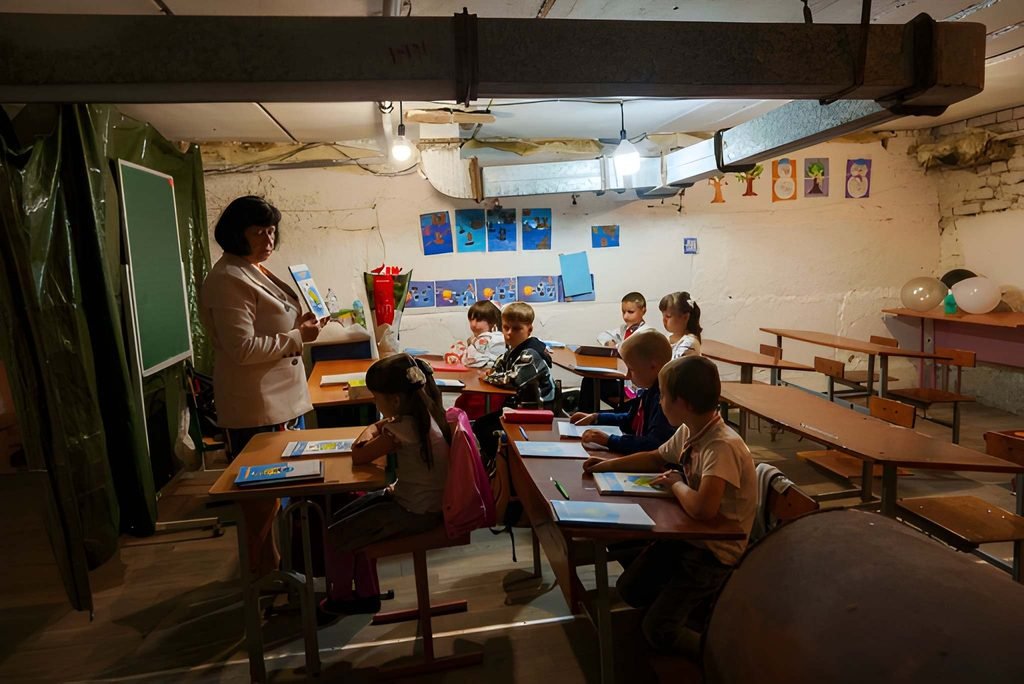
Here’s what to know about Ukraine’s underground schools, why they exist, and what they show about how the war has reshaped daily life for Ukrainian families.
What’s Happening at Khakiv’s New Underground School
Lyceum No. 24 sits underneath Kharkiv, a city in northeastern Ukraine located close to the Russian border. While much of the city above ground still bears visible damage from years of shelling, the underground facility is newly built and designed to hold up to 1,000 children.
The school opened this week as part of Ukraine’s back-to-school season, giving children in Kharkiv a safe, permanent space to attend in-person classes despite the near-constant threat of Russian bombardment. Unlike temporary shelters that families rush to during air raid sirens, the underground school is built specifically for daily use, with classrooms, lighting and facilities designed for regular instruction rather than emergency shelter alone.
Why Ukraine Is Building Schools Underground
Kharkiv’s push toward underground education did not happen overnight. The city, Ukraine’s second-largest with a pre-war population of more than 1.4 million people, sits less than 20 miles from the Russian border and has faced near-daily rocket, missile and drone attacks since Russia’s full-scale invasion began in February 2022.
City officials first responded by converting subway stations into makeshift classrooms. Kharkiv organized dozens of classrooms across several metro stations, eventually creating space for well over 1,000 children to study underground even as fighting continued above them. At the height of the bombing in past years, tens of thousands of Kharkiv residents, including thousands of children, slept on subway platforms overnight for safety.
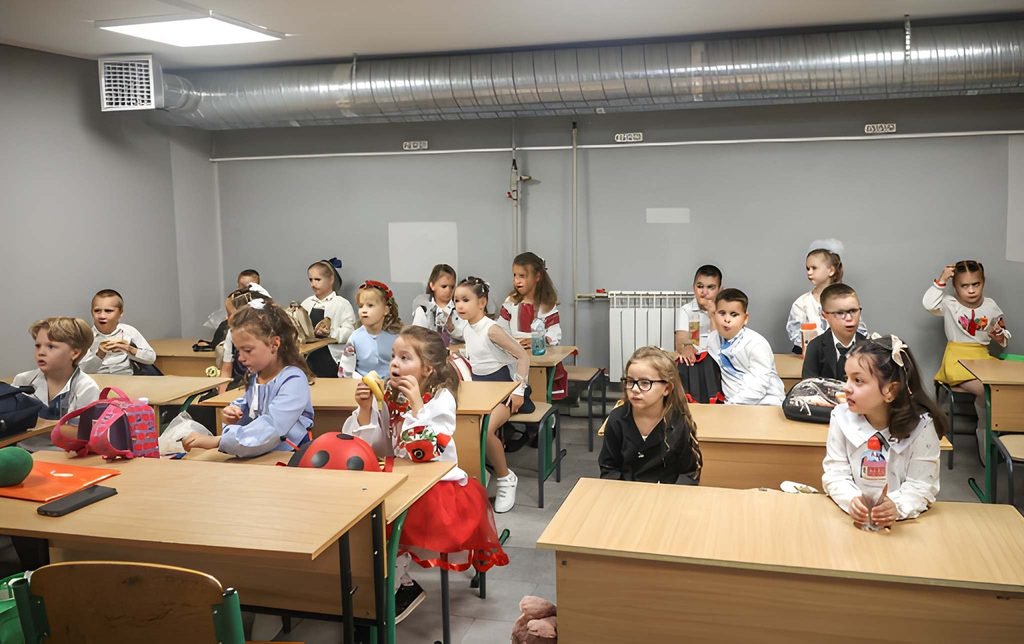
Kharkiv Mayor Ihor Terekhov has since pushed to build permanent, purpose-built underground schools rather than relying solely on repurposed subway space. The city has worked to construct several such facilities, with plans to eventually accommodate thousands of students from kindergarten through the end of high school. Terekhov has described the effort as a long-term commitment to helping families continue living in Kharkiv despite the war, rather than relocating elsewhere.
“Life should go on,” Terekhov has said of the city’s approach, describing the underground schools as central to helping residents feel secure enough to stay.
The Toll on Ukraine’s Education System
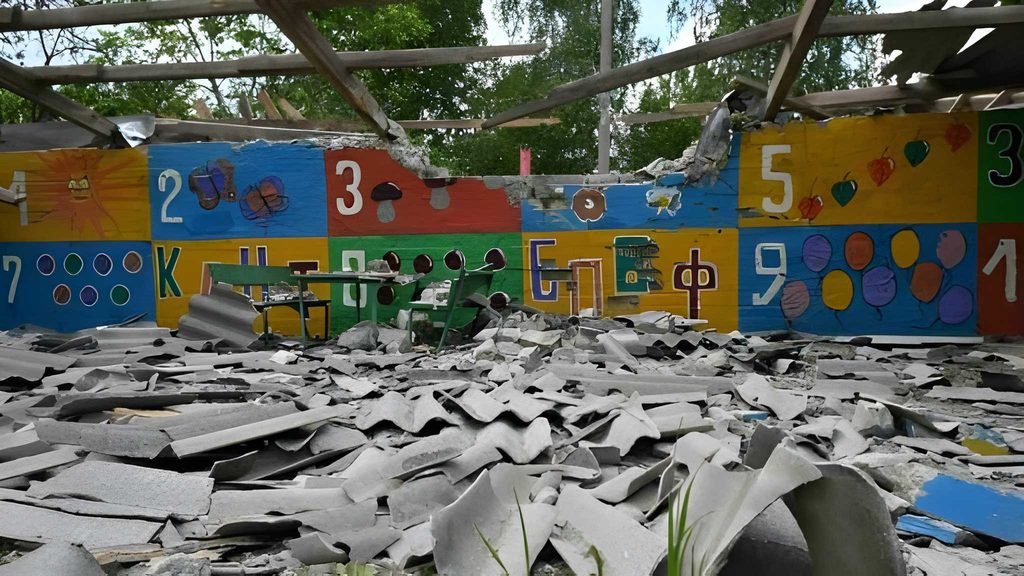
The push for underground schools in Kharkiv reflects a broader, painful reality facing Ukraine’s education system nationwide. According to Ukraine’s Ministry of Education, hundreds of educational institutions have been destroyed since the war began, with thousands more damaged.
Nationally, Ukraine’s schools welcomed roughly 243,000 first-graders for the new school year that began this week, a sharp drop from the 400,000 who started school in 2021, before the war. According to UNICEF, more than 1.8 million Ukrainian children are now living abroad, and many more remain displaced within the country, contributing to shrinking classrooms nationwide.
In Kharkiv specifically, roughly three out of four students have been able to attend only online classes in recent years due to safety concerns, according to earlier reporting on the region’s schools. City officials say the underground schools are meant to change that by making safe, in-person learning possible again.
Kyiv Schools Adapt to Near-Constant Air Raid Alerts
Kharkiv is not alone in adjusting how children go to school this year. In Kyiv, Ukraine’s capital, at least one school decided this week that it would hold regular classes directly in its basement shelter, rather than pausing lessons each time an air raid siren sounds.
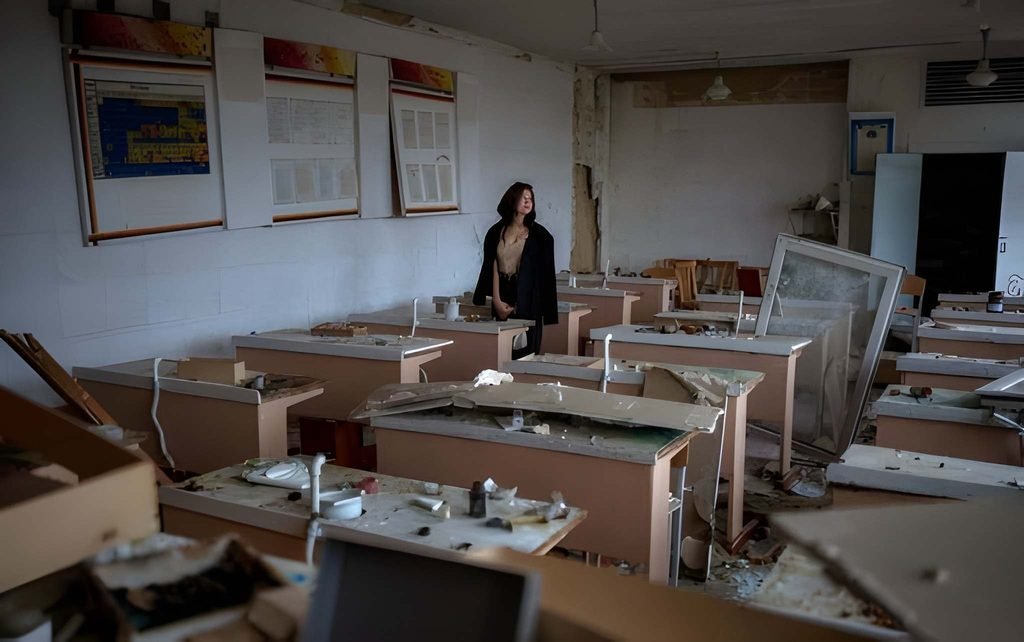
The decision came after a stretch of unusually intense Russian attacks on the capital. According to a tally of air raid alerts, sirens sounded 60 times in Kyiv over roughly 47 hours in the days leading up to the new school year. Local authorities reported dozens of deaths and more than 100 injuries in Kyiv and the surrounding region during that period.
In a letter to parents, the school explained that constantly pausing lessons to move to shelters had become unsustainable, so classes would instead take place in the shelter itself for the time being. The letter framed the shift as a way to keep learning consistent, noting that students would already be in a safe location if an alert sounded during the school day.
Why This Matters
Ukraine’s underground schools highlight both the toll the war has taken on ordinary life and the lengths communities are going to in order to preserve some sense of normalcy for children. For families who have chosen to remain in heavily targeted cities like Kharkiv, underground education offers one of the few ways for kids to continue in-person schooling, an experience widely seen as important for children’s social and academic development, without facing daily exposure to bombing risks.
At the same time, education and child-development experts have long noted that prolonged exposure to war, displacement and disrupted schooling can affect children’s wellbeing in the short and long term. City officials in Kharkiv have said staff, including some added psychologists, are involved in the underground school system in part to help support students emotionally as the war continues.
The scale of investment in these facilities also reflects an acknowledgment among Ukrainian officials that the war may continue for the foreseeable future, prompting a shift from short-term emergency measures toward permanent underground infrastructure for education.
What Happens Next
Kharkiv officials have said they intend to continue building additional underground schools beyond Lyceum No. 24, with a longer-term goal of accommodating thousands more students across the city as funding and construction allow. Officials have not given a public timeline for when the full network of planned facilities will be completed.
In Kyiv, whether more schools adopt the shelter-classroom model used this week may depend on how the pace of Russian attacks on the capital evolves in the weeks ahead. For now, Ukrainian education officials say their central goal remains the same: keeping as many children as possible in safe, in-person classrooms despite the ongoing war.
What is Ukraine’s underground school in Kharkiv?
It refer to newly built, purpose-built schools located well below ground level in Kharkiv, Ukraine, Ukraine, designed to let children attend in-person classes safely despite ongoing Russian bombing. The newest facility, Lyceum No.24, opened this week with space for 1,000 students.
Why did Kharkiv build schools underground
Kharkiv sits close to the Russian border and has faced near-daily rocket, missile and drone attacks since 2022. City officials built underground schools, first in subway stations and now in purpose-built facilities, so children could continue in-person learning without being exposed to bombing risks above ground.
How many children attend underground schools in Kharkiv?
Thousands of children have studied in Kharkiv’s underground classrooms in recent years, first through subway-station classrooms and now increasingly through purpose-built underground schools. The city has said it eventually aims to accommodate several thousand more students through additional facilities.
Are schools in Kyiv also affected by the war?
Yes. This week, at least one school in Kyiv began holding regular classes inside its basement shelter due to a surge in Russian air raid alerts on the capital, rather than pausing lessons each time a siren sounded.
How has the war affected Ukraine’s overall school enrollment?
Nationally, roughly 243,000 first-graders started school this week, down sharply from about 400,000 in 2021, before the war. UNICEF estimates more than 1.8 million Ukrainian children are now living abroad, contributing to shrinking classrooms across the country.
How many schools has Ukraine lost during the war?
According to Ukraine’s Ministry of Education, hundreds of schools have been destroyed nationwide since the war began, with thousands more damaged, disrupting education for large numbers of Ukrainian children.
Is in-person learning fully back to normal in cities like Kharkiv?
Not entirely. A large share of Kharkiv students have relied primarily on online learning in recent years due to safety concerns. Underground schools are intended to gradually expand safe in-person learning options, though officials say full normalization will take time
One Reply to “Ukraine’s Underground School:7 Significant Facts Shielding Kids From Bombs”