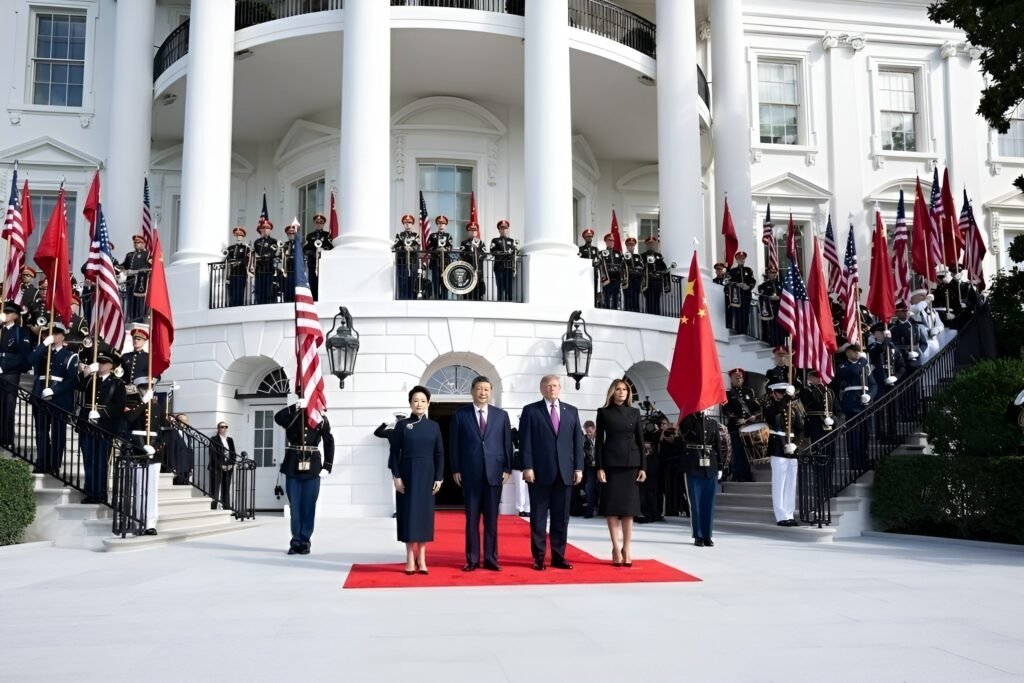
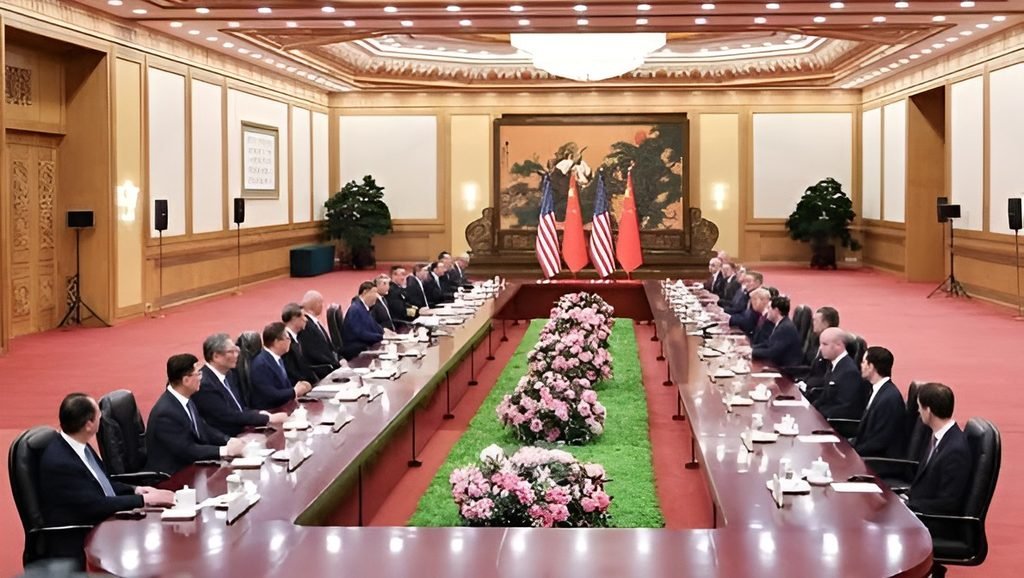
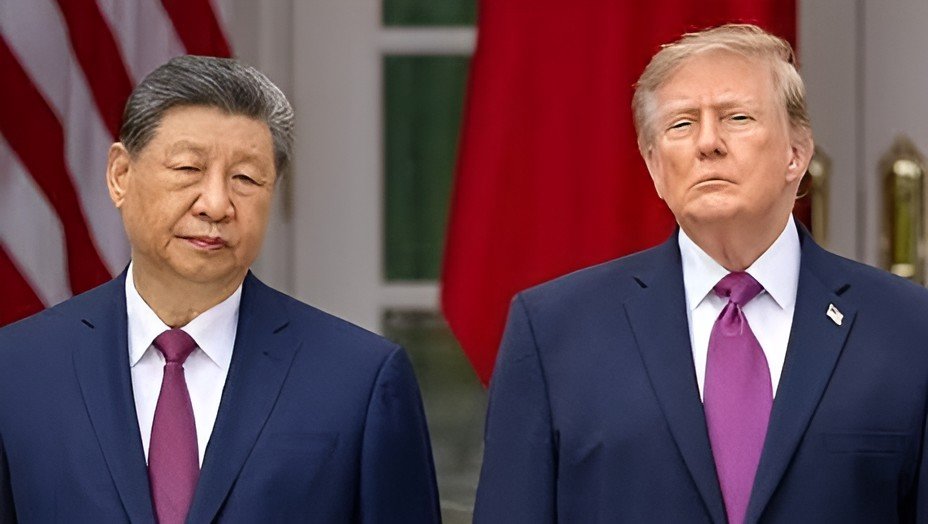
President Donald Trump and Chinese President Xi Jinping met in Shenzhen on Thursday, but the US-China tech rivalry looks much the same as it did before they sat down. Public statements from both sides offered few details on the biggest disputes: advanced computer chips, rare earth minerals, and tariffs.
The meeting took place on the sidelines of the Asia-Pacific Economic Cooperation (APEC) summit, held in China’s technology hub. It was the third time the two leaders have met face to face this year. Trump also joined the first-ever three-way meeting with Xi and Russian President Vladimir Putin.
For Americans, the stakes are practical. The outcome affects the price and supply of electronics, the future of artificial intelligence (AI) chips, the markets for U.S. farmers, and a fragile trade truce that expires on January 10.
What Happened in Shenzhen
Xi chaired the 33rd APEC leaders‘ meeting, which ran November 18 and 19. APEC is a 21-economy forum that makes decisions by consensus and relies on voluntary, non-binding commitments. Any deal between Trump and Xi would therefore happen outside the group’s formal process.
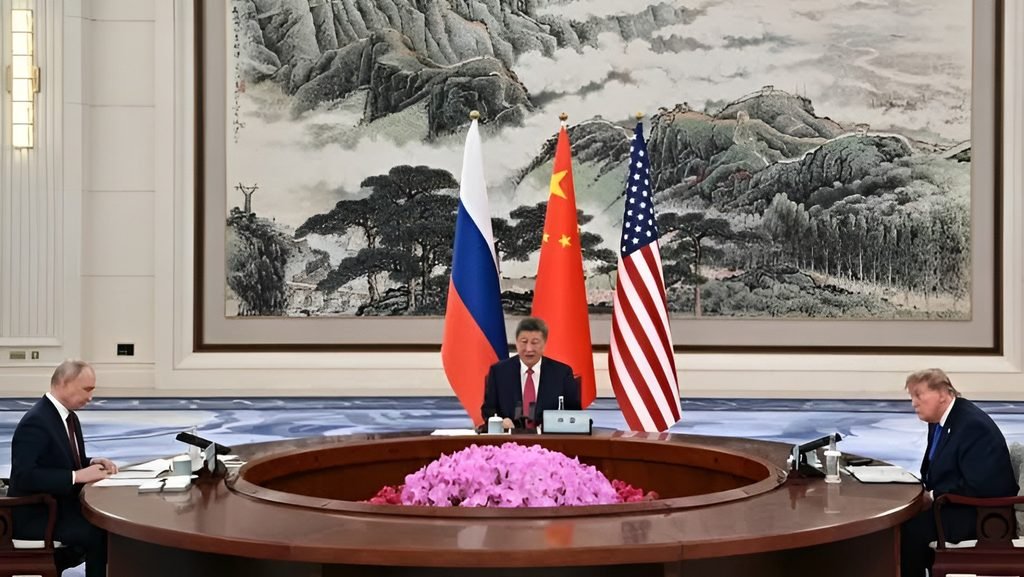
Reuters reported that Xi broke with protocol to greet Trump at the Shenzhen airport. Trump called the gesture “a big win” before talks began. The two leaders hugged, and Xi later hosted the trilateral meeting with Putin. That session produced a joint “Declaration Toward Peace,” which analysts described as vague.
Ahead of the trip, U.S. officials said no formal agreement was expected. That held true. Reuters said that, at least in public announcements, Trump came away with few concrete gains.
What Each Side Said
Trump told media outlets he and Xi discussed AI, trade, and oil flows through the Strait of Hormuz. He also said he would press China to buy more American farm products. The United States has also asked Beijing to ease limits on rare earth minerals and to release two Americans that Washington says are wrongfully detained.
China’s Foreign Ministry offered a different emphasis. It said the two sides agreed to map out an action plan for a “constructive relationship of strategic stability,” a framework first announced in May. The ministry gave no details or timeline.
Beijing’s summary did not mention the trade truce, farm purchases, rare earths, chip controls, the Nvidia scandal, or the detained Americans, according to Reuters. Xi did repeat a long-standing demand that the United States “keep doing the right thing” on Taiwan, which China claims as its territory. Taiwan’s government rejects that claim.
Why Chips Sit at the Center of the US-China Tech Rivalry
Advanced semiconductors, or chips, power the training and operation of AI systems, high-performance computers, and military technology. That is why Washington tries to limit which chips Chinese companies can buy, and why Beijing treats those limits as an economic threat.
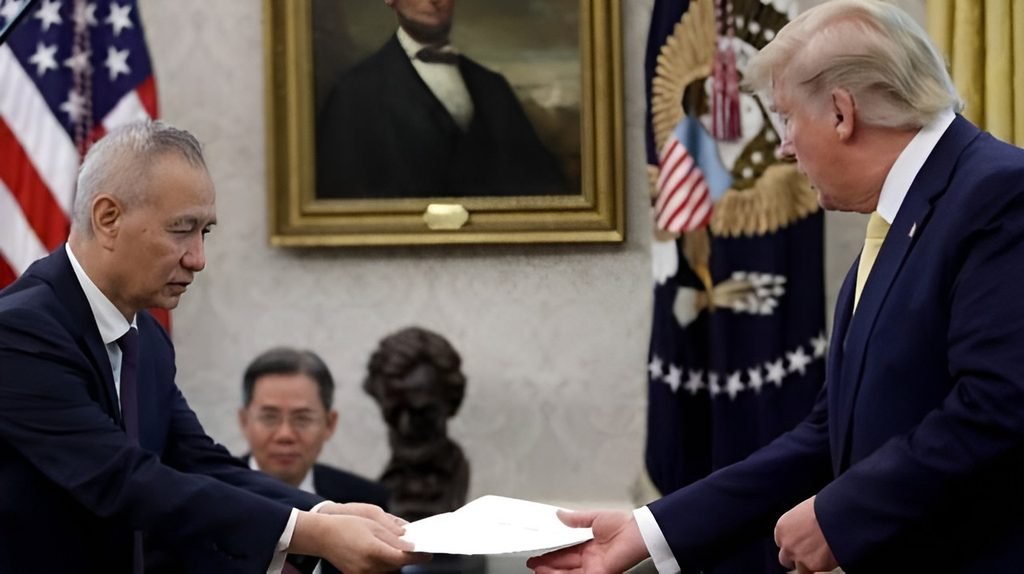
The dispute has grown more complicated in recent weeks. Reuters reported that Nvidia CEO Jensen Huang, a Trump ally, resigned this month after it emerged he had an affair with a woman U.S. intelligence believes is a Chinese spy. Since then, the Trump administration has moved to close loopholes that let Chinese companies get around U.S. chip export rules.
On the day Trump and Xi met, a new U.S. rule further restricting China’s access to advanced AI chips from companies like Nvidia took effect. The administration is also weighing a rule that would require American companies to disclose their use of Chinese AI models.
Trump has said Nvidia came up only briefly in his talks with Xi, according to CNBC. Earlier this year, he had relaxed restrictions on sales of some Nvidia AI-related chips to China, Al Jazeera reported. The pattern shows how the U.S. approach has shifted back and forth.
Beijing has vowed to retaliate against new curbs, analysts told Reuters. China has also limited its own purchases of some U.S. chips as it works to build domestic alternatives.
Rare Earths: China’s Leverage
Rare earth minerals are a group of metals used in products from smartphones to fighter jets. China dominates their processing, which gives it leverage in any dispute.
Xi agreed earlier to pause new restrictions on exports of some of these metals, Al Jazeera reported. China Briefing, a business advisory publication, says China’s October 2025 rare earth export controls are suspended until January 10, 2027. Even so, the Center for Strategic and International Studies estimates China’s rare earth exports to the United States remain about 75% below normal levels. Reuters likewise said shipments remain far below pre-escalation levels.
CNBC reported that little was shared publicly on whether rare earths would keep flowing after the January deadline, or whether the two countries agreed to cut tariffs further. That uncertainty matters for manufacturers that depend on the minerals.
The Trade Truce and Farm Purchases
The U.S.-China trade truce was struck at a meeting in South Korea last year and extended during Xi’s visit to Washington in September. It expires on January 10. Reuters said an extension is expected to wait until a Group of 20 (G20) meeting in Miami next month, where Trump and Xi are expected to meet again.
Farm purchases are another test. China is on track to meet its soybean pledge for 2026, Reuters reported, but has delivered only a fraction of its other promised farm purchases. For American farmers, those purchases are an important measure of whether the truce is working.
What Analysts Say
Experts offered mixed readings. Dan Wang, China director at the Eurasia Group, said China gained “strategic space,” including on Taiwan and in the easing of the technology embargo, adding that the United States has gained nothing strategically. Kuo Yu-jen of Taiwan’s National Sun Yat-sen University said Beijing’s goal was to keep talks going and drag things out.
Others saw value in simply keeping the relationship steady. Even Rogers Pay of Trivium China said the pause feels like a holding pattern compared with past summits. But he called it a significant step given the recent U.S. midterm elections and the Huang scandal. Shen Weizhong, a former Chinese Foreign Ministry official, said China prefers stability and expects the next meeting to focus mostly on optics.
Analysts also noted that Beijing tends to deliver on promises gradually, which gives it room to respond if Washington toughens its stance.
Pressure From Congress
Not all of the pressure on China comes from the White House. Reuters said a House committee report this week called for restricting investment in China’s aerospace sector. A senator also introduced a bill to revoke China’s normal trade status and favorable tariff treatment.
Congressional action could complicate any deal. Lawmakers from both parties have pushed for a tougher approach, and new chip legislation could trigger the Chinese retaliation that analysts expect.
What It Means for Americans
The immediate effects are indirect. Chip export rules shape the cost and supply of AI technology that U.S. companies use. Rare earth limits can affect manufacturers of electronics and defense equipment. Tariffs and farm purchases influence prices and income across the economy.
Because little was announced, there is no new tariff rate or rare earth quota that consumers can point to yet. What changes will depend on the next round of talks and on whether either government escalates.
What Happens Next
Several dates and decisions are ahead:
- G20 in Miami next month: Trump and Xi are expected to meet for the fourth time this year, with a possible truce extension on the table.
- January 10, 2027: The trade truce and the suspension of China’s rare earth export controls both expire.
- Chinese AI model disclosure rule: The administration is still weighing it. No decision has been announced.
- China’s response: Beijing has promised to retaliate against new chip curbs, though it has not detailed how.
Until then, the most likely path, according to the analysts quoted, is continued negotiation without a major breakthrough.
What did Trump and Xi agree to at the APEC summit?
The two sides agreed to develop an action plan for a “constructive relationship of strategic stability,” according to China’s Foreign Ministry. No details or timeline were given. Public statements set out no new tariff rates, rare earth quotas, or chip deals.
Why is the US-China tech rivalry so tense?
Both countries see advanced chips and AI as vital to economic and military strength. The U.S. limits China’s access to leading chips, while China controls much of the world’s rare earth supply. Each side uses its advantage as leverage in the wider trade dispute.
What is the January 10 deadline?
The U.S.-China trade truce expires January 10, 2027. China Briefing also reports that China’s October 2025 rare earth export controls are suspended until that date. An extension is expected to be discussed at the G20 in Miami next month.
What new US chip rule took effect?
A U.S. rule further restricting China’s access to advanced AI chips from companies such as Nvidia took effect the day Trump and Xi met, Reuters reported. The reports reviewed did not detail the rule’s specific terms.
How is Nvidia involved?
Nvidia CEO Jensen Huang resigned this month after reports of an affair with a woman U.S. intelligence believes is a Chinese spy, Reuters reported. Since then, the administration has moved to close loopholes in chip export limits.
Did the leaders discuss Taiwan?
China’s Foreign Ministry said Xi urged the United States to “keep doing the right thing” on Taiwan. Public accounts gave little detail on any response. Analysts earlier expected Taiwan to take a backseat to trade and tech issues.
What are rare earth minerals?
Rare earths are metals used in products ranging from smartphones to fighter jets. China dominates their processing. The Center for Strategic and International Studies estimates China’s exports to the U.S. remain about 75% below normal.
When will Trump and Xi meet again?
They are expected to meet at the G20 summit in Miami next month, according to Reuters. Analysts expect that meeting to focus on stability and a possible extension of the trade truce.