
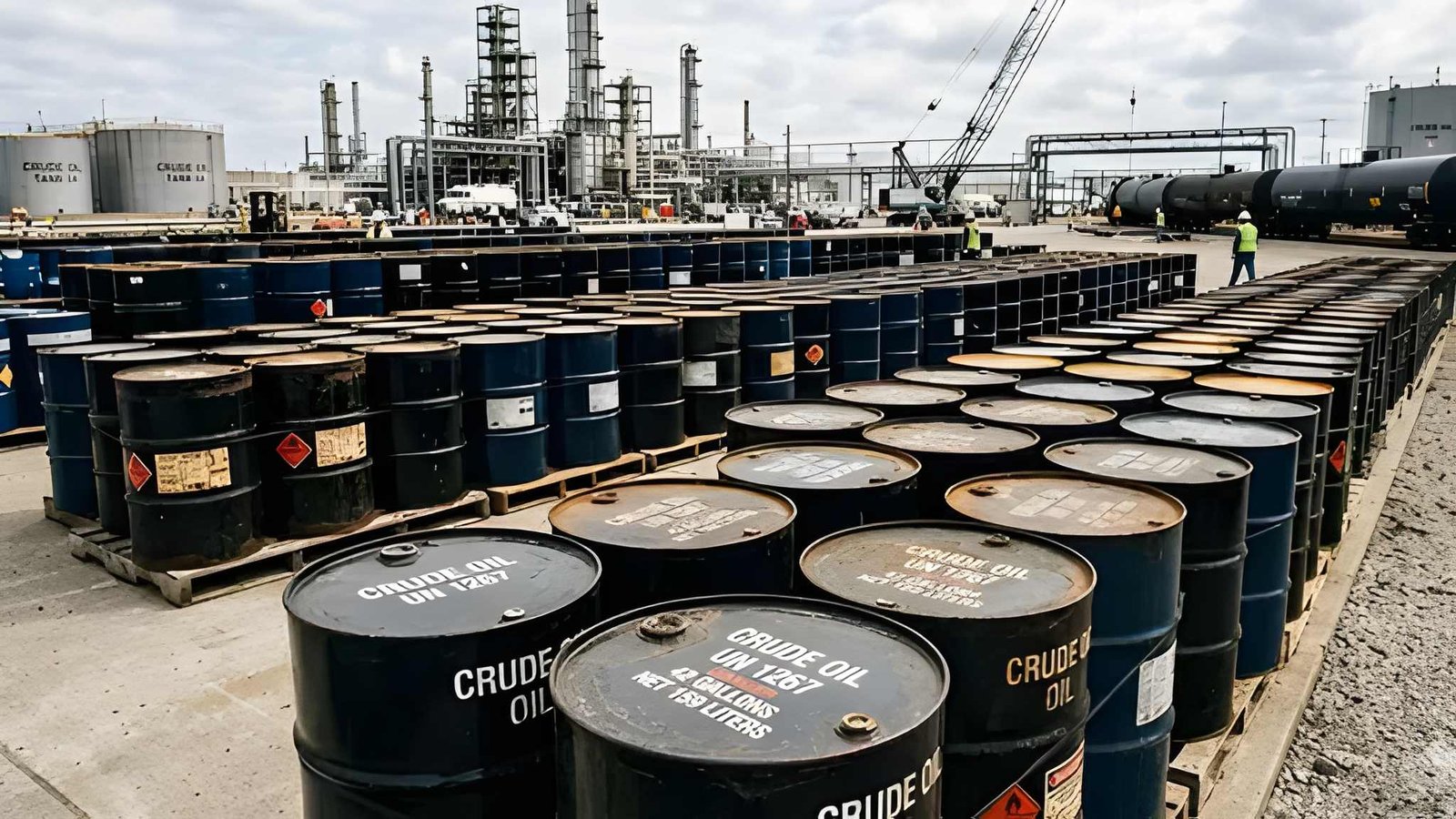
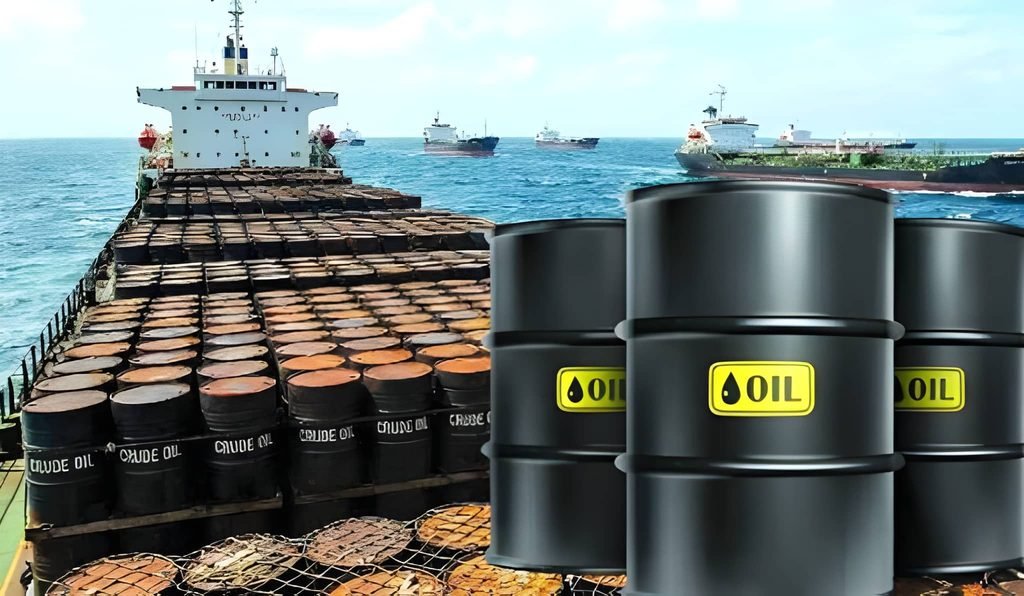
Oil prices climbed above $100 a barrel on Wednesday for the first time since July, as a fresh round of fighting between the United States and Iran deepened fears of a longer, costlier disruption to the world’s energy supply. The spike in oil prices came a day after U.S. forces destroyed five Iranian oil tankers, escalating a war that has already pushed American gas and diesel prices to some of their highest levels in years.
Brent crude, the international benchmark used to price oil around the world, jumped by roughly 2.7% to trade at about $100.57 a barrel for November delivery contracts, with some reports showing it briefly touching $100.72 before easing slightly. U.S. crude, known as West Texas Intermediate, rose about 2% to roughly $95 a barrel. Both benchmarks are now up more than 60% since the start of the year.
For American drivers and truckers, the numbers translate directly into higher costs at the pump. The national average price for a gallon of regular gasoline rose 7 cents overnight to $4.22, according to AAA, now more than a dollar higher than it was at this time last year. Diesel, which powers most trucking, shipping, and farm equipment, hit a record average of $5.94 a gallon.
What Triggered the Latest Oil Price Jump
The immediate cause of Wednesday’s price surge traces back to a series of naval confrontations in the Middle East. U.S. Central Command, known as CENTCOM, said Tuesday that its forces had destroyed five oil tankers linked to Iran’s Islamic Revolutionary Guard Corps, or IRGC. The strikes came after the IRGC twice fired ballistic missiles toward a U.S. Navy aircraft carrier and a guided-missile destroyer over the previous two days. CENTCOM said both American ships successfully evaded the missiles and that no U.S. service members were hurt.
Vice Adm. Brad Cooper, who leads U.S. naval forces in the region, said the United States would “not hesitate to defend American forces, and if necessary, destroy Iran’s limited and exposed oil fleet.” CENTCOM described the targeted vessels as part of what it called a multibillion-dollar shadow network that finances the IRGC and its allied militias across the region. Defense Secretary Pete Hegseth said Iran’s tanker fleet is now largely defenseless, arguing that Tehran no longer has a navy or air force capable of protecting its ships.
In response, Iran’s foreign ministry said the tanker strikes amounted to a continuation of what it called American military aggression and accused Washington of running a naval blockade and economic war against the country. Iran’s government said the strikes violated the United Nations Charter and constituted a war crime, a characterization the United States has not accepted. The IRGC also warned that all oil tankers in Kuwaiti and Bahraini waters should evacuate, raising fears of further attacks in one of the world’s busiest oil-shipping corridors.
Why Investors Are Worried
Energy traders watch the Strait of Hormuz closely because it is one of the most important chokepoints in global oil trade. According to independent research firm Rystad Energy, roughly 15 million barrels of crude oil, or about a fifth of the world’s daily oil supply, normally pass through the narrow waterway between Iran and the Arabian Peninsula. Any sustained disruption there tends to ripple quickly through global energy prices.
The current fighting is part of a war that began on February 28, when President Donald Trump ordered joint U.S.-Israeli airstrikes against Iranian military, government, and infrastructure targets. Since then, the conflict has moved through several distinct phases: intense strikes early on, a series of fragile ceasefires and diplomatic talks mediated by countries including Qatar, Oman, and Pakistan, and repeated breakdowns that reignited fighting, especially around the Strait of Hormuz.
Delegations from the U.S. and Iran met in June to discuss a framework meant to end the war, built around a memorandum of understanding both sides had signed. Despite that diplomatic opening, strikes have continued intermittently for months, with oil prices swinging sharply up and down depending on whether fighting or negotiations dominated the headlines that week. Prices dropped as low as the $70s at various points this year when talks appeared to be progressing, only to spike again once fighting resumed.
The Toll on American Consumers
The financial impact on U.S. households has been substantial and is still growing. According to a cost-tracking analysis published by Brown University’s Watson School of International and Public Affairs, American consumers have paid an extra $100.9 billion for gasoline and diesel combined since the war began on February 28, an amount equal to roughly $770 per household. Of that total, higher gasoline costs accounted for about $55 billion, while higher diesel costs made up the remaining $45 billion.
Diesel prices matter beyond what people notice at truck stops. Because diesel fuel powers most trucking, farming, and rail transport in the United States, higher diesel costs tend to filter into the price of groceries, retail goods, and other everyday products delivered by truck. Diesel’s climb to a record $5.94 a gallon this week suggests those broader cost pressures are likely to continue.
It’s also worth noting that Middle East conflict isn’t the only factor pushing fuel costs higher. Bank of America pointed this week to refinery outages in Russia and reduced refining capacity elsewhere in the world as additional forces driving up gasoline and diesel prices globally, separate from the Iran war itself. In other words, even if the war eased tomorrow, some of the current price pressure would likely persist because of unrelated supply problems at refineries.
What Analysts Expert Next
Wall Street’s outlook on where oil prices go from here remains mixed and increasingly cautious. Goldman Sachs this week raised its December price forecast for Brent crude by $5, to $85 a barrel, and now expects Brent to average $80 through 2027, up from its earlier forecast of $75. The bank said it expects oil production in the Middle East to recover only gradually, likely not until sometime next year.
Goldman’s analysts also said the risks to their forecast are “significantly tilted to the upside,” meaning prices are more likely to rise further than to fall sharply from here, at least in the near term. The bank noted that options markets now imply a 25% probability that Brent will still be trading above $100 a barrel by March 2027, up sharply from just a 6% probability estimated a month earlier. In a best-case scenario, where Persian Gulf oil production climbs by 1 million barrels a day above pre-war levels, Goldman said Brent could fall into the $60 range sometime in 2027.
Treasury Secretary Scott Bessent told Fox News over the weekend that the current energy price shock to the economy “is going to end,” though he did not offer a specific timetable. President Trump, for his part, wrote on social media that oil prices would “drop precipitously” once the United States wins the war with Iran, framing the current pain at the pump as a temporary cost of ending the conflict on American terms.
The Human and Military Cost Behind the Numbers
The economic fallout has developed alongside a rising toll on U.S. service members stationed in the region. The Pentagon’s casualty database, which has tracked injuries and deaths linked to Middle East operations under the label “Overseas Operations” since July 7, reported this week that 403 people had been wounded in action between July 7 and September 8, including 26 additional troops confirmed wounded in just the most recent update. The military did not disclose specific locations or dates tied to those injuries.
Kuwait, whose Ahmed al-Jaber Air Base has come under Iranian missile and drone fire during the conflict, condemned the recent attacks “in the strongest terms” and formally invoked its right of self-defense under Article 51 of the United Nations Charter. The involvement of Gulf allies like Kuwait and Bahrain in the fighting has added another layer of complexity and risk to a conflict that began as a bilateral confrontation between the U.S. and Iran.
Why It Matters for the Midterm Elections
Rising fuel prices are landing at a politically sensitive moment. With the U.S. midterm elections roughly eight weeks away, higher costs at the pump and in grocery stores have the potential to shape voter sentiment heading into the fall. Historically, sustained increases in gas prices have weighed on approval ratings for sitting administrations, regardless of the underlying cause, making the war’s economic side effects a factor that both parties are likely to address on the campaign trail in the weeks ahead.
What Happens Next
For now, there is no confirmed timeline for a ceasefire or a broader resolution to the war. Diplomatic talks mediated by Qatar, Oman, and Pakistan have opened and closed multiple times since February without producing a lasting agreement, and the latest tanker strikes suggest the conflict remains far from settled. Markets will likely continue reacting to each new exchange of strikes, with oil prices expected to stay volatile in the near term.
Analysts including those at Goldman Sachs say a meaningful and lasting drop in oil prices probably depends on a substantial recovery in Middle East oil production, something that is unlikely to happen quickly even if a ceasefire is reached soon. In the meantime, American drivers, truckers, and businesses that depend on fuel are likely to keep absorbing higher costs, with no clear end date in sight.
Why did oil prices hit $100 a barrel this week?
Oil prices rose after U.S. Central Command said its forces destroyed five Iranian oil tankers on Tuesday, following Iranian ballistic missile attacks on a U.S. Navy aircraft carrier and destroyer. The escalation raised fears of further disruption to oil supplies moving through the Middle East, particularly the Strait of Hormuz.
How much has the Iran war cost American drivers?
According to a tracker from Brown University’s Watson School of International and Public Affairs, American consumers have paid roughly $100.9 billion more for gasoline and diesel since the war began on February 28, or about $770 per household. Diesel prices have been especially affected, reaching a record $5.94 a gallon this week.
What is the Strait of Hormuz, and why does it matters for oil prices?
The Strait of Hormuz is a narrow waterway between Iran and the Arabian Peninsula that normally carries about a fifth of the world’s daily oil supply, according to Rystad Energy. Disruptions there, whether from attacks, blockades, or minefields, tend to push global oil prices higher because so much crude passes through this single chokepoint.
When did the U.S.-Iran war start?
The war began on February 28, 2026, when President Trump ordered joint U.S.-Israeli airstrikes against Iranian military and government targets. The conflict has continued in phases since then, including periods of intense fighting and multiple attempted ceasefires and negotiations.
Do analysts expert oil prices to keep rising?
Forecasts are mixed. Goldman Sachs raised its Brent crude forecast for December to $85 a barrel and said risks are tilted toward prices rising further rather than falling. The bank estimates a 25% chance that Brent remains above $100 a barrel by March 2027, though it also outlined a scenario where prices could fall toward $60 in 2027 if Middle East oil production recovers.
Is the Iran war the only reason gas and diesel prices are so high?
No. While the war is a major factor, Bank of America has pointed to separate issues, including refinery outages in Russia and reduced refining capacity elsewhere, as additional causes of higher gasoline and diesel prices worldwide.
Has the U.S. military suffered casualties in the Iran war?
Yes. The Pentagon’s casualty database reported 403 people wounded in action tied to Middle East operations between July 7 and September 8, though specific locations and dates were not disclosed publicly.