
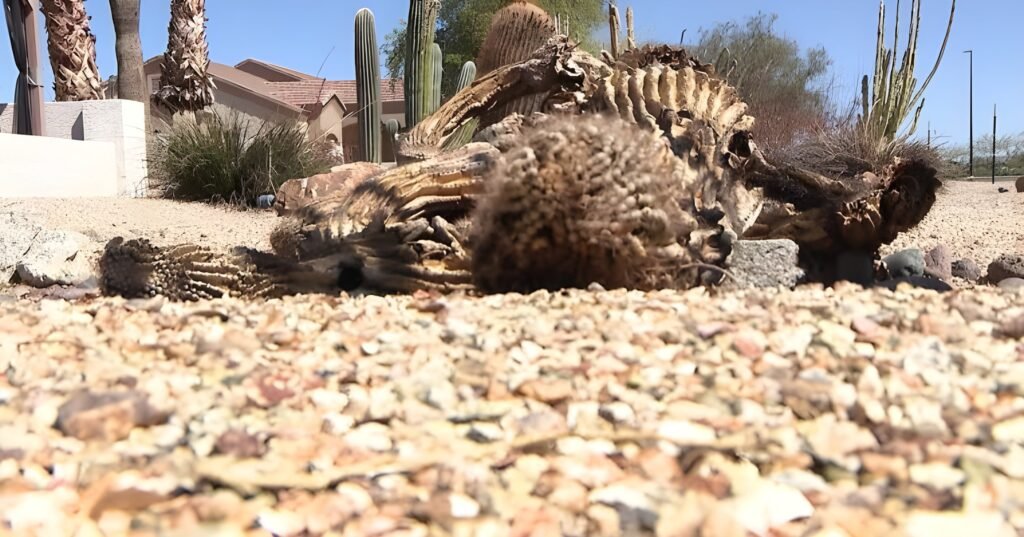
The saguaro cactus, the tall, arm-raised symbol of the American West, is struggling to survive a new kind of extreme heat. A Reuters special report published Tuesday says the saguaro cactus dying rate in Phoenix jumped sharply after 2020, and the biggest culprit may not be hot afternoons. It is hot nights.
Researchers at the Desert Botanical Garden in Phoenix told Reuters that about 1% to 2% of saguaros died each year from all causes before 2020. The share they attribute just to heat rose to 4% in 2021 and 7% in 2023, the summer Phoenix had 31 straight days of at least 110 degrees Fahrenheit. The garden’s research director, Kevin Hultine, said the heat-related death rate has since eased, but only to 4% to 5%.
The findings matter well beyond Arizona. Reuters used the cactus as a case study for what it calls “heat storms,” a new term for giant, long-lasting heat waves that now cover huge parts of the planet.
What Reuters Found About the Saguaro
Saguaros can grow 40 feet tall or more and often live 150 years or longer. They evolved over thousands of years in the Sonoran Desert, so it may seem odd that heat could threaten them. Reuters says the problem is not just the daytime highs. It is how long the heat lasts and how little it cools at night.
Here are the main numbers from the report:
- Death rate: About 1% to 2% a year before 2020. Heat-related deaths in Phoenix reached 4% in 2021 and 7% in 2023, then settled to 4% to 5%, according to Hultine.
- Hot nights: In the entire 1960s, the Phoenix region had just nine nights when the temperature stayed above 86 degrees Fahrenheit (30 degrees Celsius), fewer than one a year. This decade, it has already had more than 175, or more than 25 a year, based on Reuters’ analysis of weather data.
- Recent summers: A single heat storm in 2023 brought 24 nights at or above that level to Phoenix. In 2024, there were 29. Phoenix Sky Harbor Airport logged 115 such nights across those two years.
- Daytime extremes: Phoenix has had 266 days above 113 degrees Fahrenheit since 1960, almost 100 of them this decade. Tucson has had only 13.
What Is a “Heat Strom”?
Reuters analyzed hourly temperatures for more than 1 million places around the world, going back to 1960. With help from climate researchers, it defined a heat wave as at least five days when the temperature falls in the hottest 10% of the historical range for that location.
The news agency then labeled the biggest heat waves, those covering 1% of the planet or about half the size of Canada, as “heat storms.” The term is Reuters’ own, not an official scientific category.
The change over time is striking. The largest heat storm of the 1960s covered about 6% of the planet and lasted around a month and a half. The largest one this decade reached nearly 85% of the planet over a year-long life. A separate heat storm has been active for nine months and has covered almost 80% of Earth’s surface so far, Reuters reported.
Why Hot Nights Are So Harmful
Most plants make food during the day. The saguaro works differently. It uses a method called CAM photosynthesis, which lets it keep its pores mostly closed in daylight to save water. Then it opens them at night, when it is cooler, to take in carbon dioxide and store it until morning.
Research cited by Reuters shows that nighttime heat can disrupt the enzymes involved in storing that carbon dioxide. The process starts to sputter as temperatures near 86 degrees Fahrenheit, and it gets worse the hotter the night. Pores may also fail to open fully on hot, dry nights. In plain terms, a hot night can leave the cactus short on the food it needs for the next day.
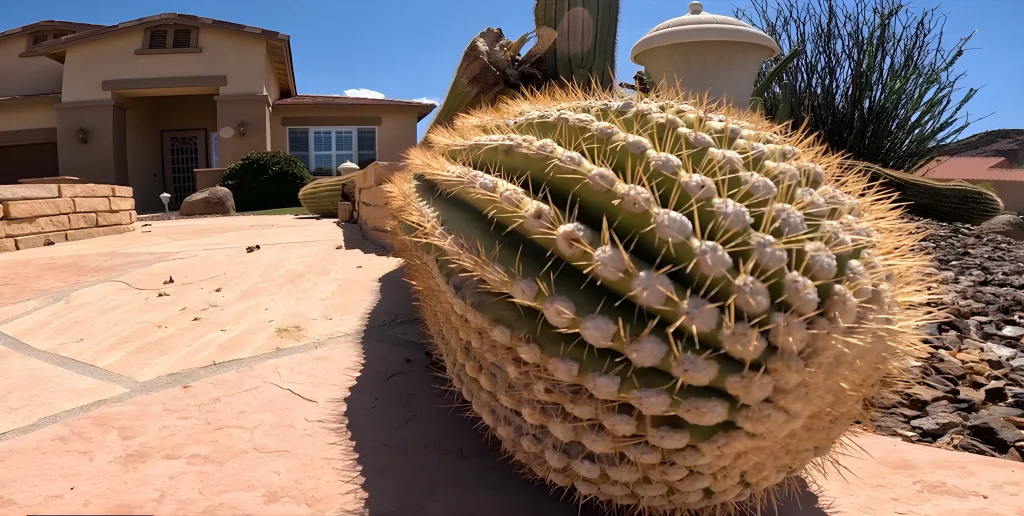
Hot nights also drain water. A saguaro’s trunk and arms are up to 90% water, and the largest plants hold about 1,000 gallons. That water keeps the cactus upright. If too much evaporates, the plant can sag and fall over. Scientists do not know the exact temperature at which the process fails, and it may vary by species or plant.
A Saguaro Cactus Dying Slowly, Not Suddenly
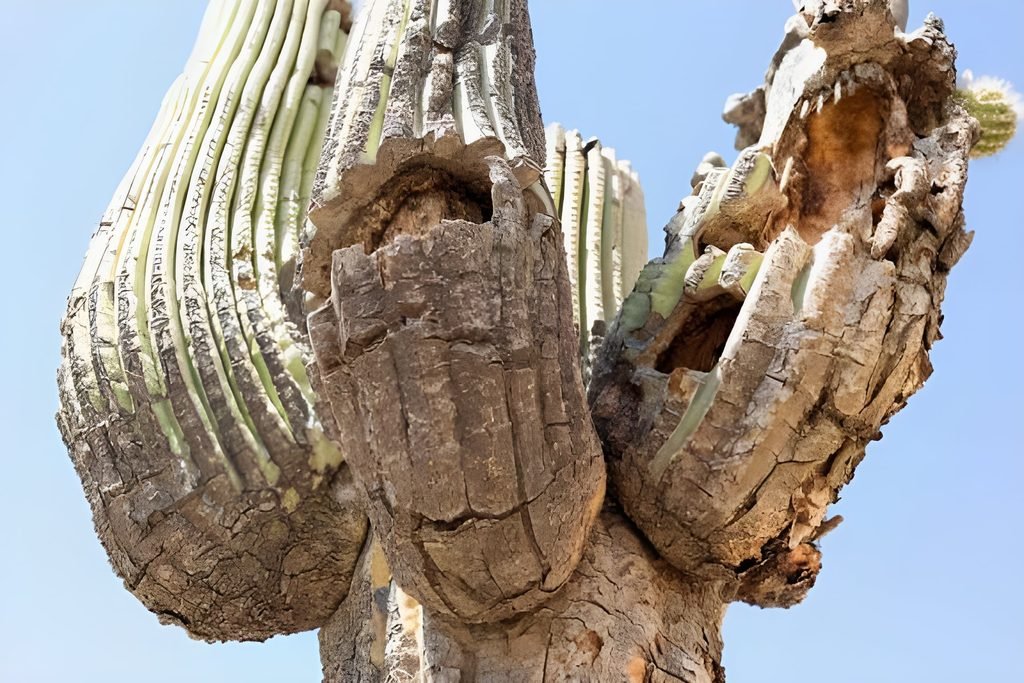
Reuters described how heat damage stacks up. When the air hits 113 degrees Fahrenheit, the surface of a saguaro can reach 131 to 140 degrees, according to Hultine. That can burn the skin, a problem called sunscald. Scalded areas stop making food. In some cases, the skin cracks, letting in bacteria and fungi that can produce a black, oozing rot.
Weakened plants have a harder time fighting those infections. Hultine compared the process to how untreated HIV and AIDS patients often die from other illnesses their weakened immune systems cannot stop. The heat storms, he said, slowly wear the saguaro down in a similar way.
Researcher Ali Schuessler told Reuters she measures the health of 21 saguaros at South Mountain Park and Preserve with a light-pulsing device. A healthy patch of green skin scored 0.83. A sun-damaged brown patch beside it scored 0.61, about a 25% drop. A crusty, scalded area scored 0.16. She said it can take a decade for these plants to die.
Phoenix vs. Tucson
Location matters. Phoenix sits about 1,100 feet above sea level, and its saguaros are struggling. Researchers found the cacti at the higher, cooler elevations around Tucson are still doing well, Reuters reported. Tucson has had only 11 nights since 1960 that stayed above 86 degrees Fahrenheit, so nighttime heat rarely disrupts photosynthesis there.
That gap is a reminder that the saguaro’s range is large. It stretches hundreds of miles south, including cooler areas along the Sea of Cortez coastline. Reuters noted that the death rate has risen in Phoenix but that the plant’s long-term fate will play out over decades because it grows and reproduces slowly.
Why New Saguaros Are Not Replacing Old Ones
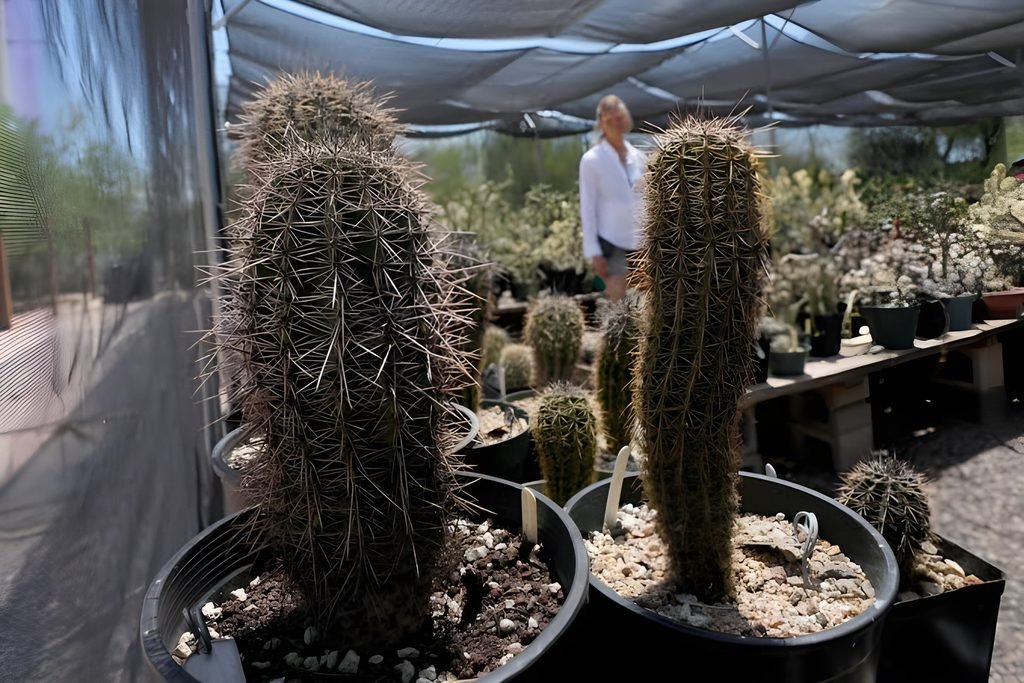
The report also points to a second problem: reproduction. Each saguaro produces hundreds of thousands of seeds a year and as many as 40 million over its life. But fewer than one in 1,000 of those seeds becomes a seedling, and more than 99% of seedlings die in their first year. A one-year-old saguaro is only about a quarter inch tall, so summer heat can dry it out quickly.
Many young cacti survive only under the shade of a rock or a “nurse tree.” Hultine and Schuessler said some of those trees are also dying from heat.
As a result, a large new crop of saguaros appears only about once every two to three decades. Scientists have linked those rare surges to El Niño years that bring heavy winter rain. The last El Niño to produce one was the “super” event of 1982-83. Since then, El Niños have still brought rain, but also heat storms that dry out the soil before young cacti can use the water.
In the Kofa Mountains west of Phoenix, Hultine can point to groups of saguaros from the 1920s, the 1950s and the 1980s. There are only a few younger plants and no strong group behind them. Schuessler warned that if saguaros cannot reproduce, the species faces a bleak long-term outlook, even if the adults survive for a time.
Other Desert Animals Are Struggling Too
Reuters said research suggests some desert animals are also in trouble. In southern Africa’s Kalahari Desert, meerkat pups gained less weight and were more likely to die during droughts and in extra-hot conditions. The number of days in a heat wave or heat storm there rose eightfold, from 48 in the 1960s to at least 390 this decade.
In the Mojave Desert, researchers resurveyed 61 sites first studied by zoologist Joseph Grinnell about a century ago. On average, those sites lost more than 40% of their bird species. Reuters said researchers pointed to climate change, especially declining rainfall, as the main driver. Small mammals such as mice did not decline, in part because they can burrow to escape daytime heat.
Reuters also noted that much remains unknown about whether and how species adapt. Some birds, for example, might move to cooler places, and meerkat numbers have rebounded after past droughts.
What Other Research Shows
The Reuters report adds to a growing body of research. A University of Arizona-led study released November 12 found that climate forecasts often underestimate risks to species because they rely on average temperature and rainfall rather than extremes. Senior author Brian Enquist said drought has already caused large-scale deaths among chollas, prickly pears and saguaros in the Southwest.
Local reporting in 2026 has also described struggling saguaros in Phoenix. Fox 10 Phoenix reported in July that experts believe pavement and concrete may keep the plants from cooling at night. The Desert Botanical Garden’s own collection has shrunk from about 1,000 cacti to nearly 800, according to a report citing Fox 10. Arizona’s Department of Water Resources said April 2020 through March 2025 ranked as the third hottest and fourth driest five-year stretch on record for the state.
What It Means for Arizonans
Most people will notice the change as a landscape shift: more leaning, sagging and fallen cacti in cities like Phoenix. Experts quoted by Fox 10 said homeowners who think a yard saguaro is struggling can call a consultant to look at it, and that planting a young cactus in the shade of a larger tree can help. Monsoon rains can also give relief.
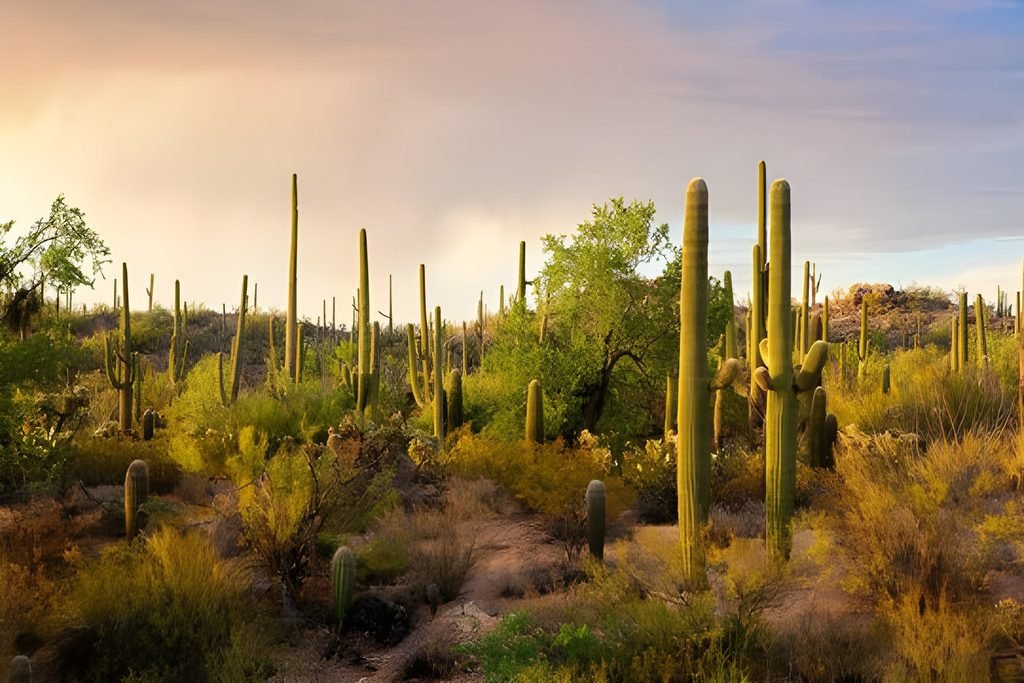
The effects reach beyond one plant. The saguaro provides nesting space for birds such as Gila woodpeckers and flowers that feed bats, so its decline would ripple through the desert ecosystem. That point comes from general ecology sources, not from the Reuters report.
What Happens Next
Reuters reported that another super El Niño has formed over the Pacific. It could bring heavy rain, but Hultine, citing long-term forecasts, expects an extremely hot spring and summer in Phoenix that would dry out soil moisture. He is not hopeful and said the area’s saguaros are “effectively a relic.”
No government decision or policy response was reported in the coverage reviewed for this article. Research at the Desert Botanical Garden and other groups is ongoing, and Reuters said the saguaro’s fate will take decades to become clear.
Why is the saguaro cactus dying in Phoenix?
Researchers say prolonged heat is a major factor, especially hot nights. Reuters reported that warm nights can disrupt how saguaros make food and drain their stored water. Heat can also cause sunscald and infections. Hultine said heat-related deaths reached 7% in 2023.
What is a heat storm?
A heat storm is a term Reuters created for the largest heat waves, those covering about 1% of the planet. A heat wave is at least five days in the hottest 10% of a place’s historical temperatures. It is not an official scientific category.
How long do saguaro cacti live?
Saguaros can live 150 years or more, according to Reuters, and sometimes up to about 200 years. They can grow 40 feet tall or higher. They also grow and reproduce slowly, which makes recovery from heat damage difficult.
Why do hot nights hurt saguaros?
Saguaros open their pores at night to take in carbon dioxide for photosynthesis. Reuters said that process starts to break down as temperatures near 86 degrees Fahrenheit. Hot nights also cause more water loss, which can weaken the plant and make it sag.
Are saguaros dying everywhere?
No. Reuters said saguaros near Phoenix are struggling, but those at higher, cooler elevations near Tucson are still thriving. The plant’s range also extends hundreds of miles south, including cooler areas along the Sea of Cortez.
Will the saguaro cactus go extinct?
Reuters did not predict extinction. It said the cactus’s fate will unfold over decades. But Hultine and Schuessler warned that poor reproduction and rising heat storms threaten long-term viability, and Hultine said he is not hopeful about the area’s saguaros given the forecast.
What can homeowners do to help a struggling saguaro?
Experts quoted by Fox 10 Phoenix said people can call a consultant to inspect a struggling saguaro and may plant young cacti in the shade of a larger tree. Rain during monsoon season can also help.





One thought on “Saguaro Cactus Dying in Phoenix: Heat Storms Pushed Death Rate to 7%, Returns Finds”