Powerful Thanksgiving storms flooded communities along the East Coast, knocked out electricity to more than 900,000 homes and businesses, and forced the first weather-related postponement in the history of the Macy’s Thanksgiving Day Parade. At the same time, heavy snow fell across parts of the Midwest and record-high tides triggered evacuations along the California coast.
The Associated Press reported that the strongest impacts hit the East Coast, where high winds, heavy rain, and coastal flooding combined on Thursday. More than 2,200 flights to or from U.S. destinations were delayed and more than 400 were canceled, according to FlightAware.
The Thanksgiving storms hit one of the busiest travel periods of the year. Here is what happened, where the damage was worst, and what forecasters expect for the rest of the holiday weekend.
What Happened on Thanksgiving Day
Two very different storm systems struck opposite sides of the country on Thursday. In the East, a strong coastal storm brought torrential rain, wind, and flooding from the Carolinas to New England. In the Midwest, cold air turned precipitation to snow. Along the West Coast, strong winds and unusually high tides pushed ocean water onto land.
The National Weather Service issued wind advisories from northern Georgia through most of the mid-Atlantic and southern New England, according to the AP. The agency’s forecast office had warned days earlier that the storm would threaten Thanksgiving morning travel, Turkey Trots, and holiday parades from the Carolinas to southern New England.
AP reported that no injuries were noted in several of the specific incidents it described, including scaffolding collapses in New York City and flooding rescues in Avalon, New Jersey. The AP report did not include a nationwide casualty count.
East Coast Flooding and Rescues
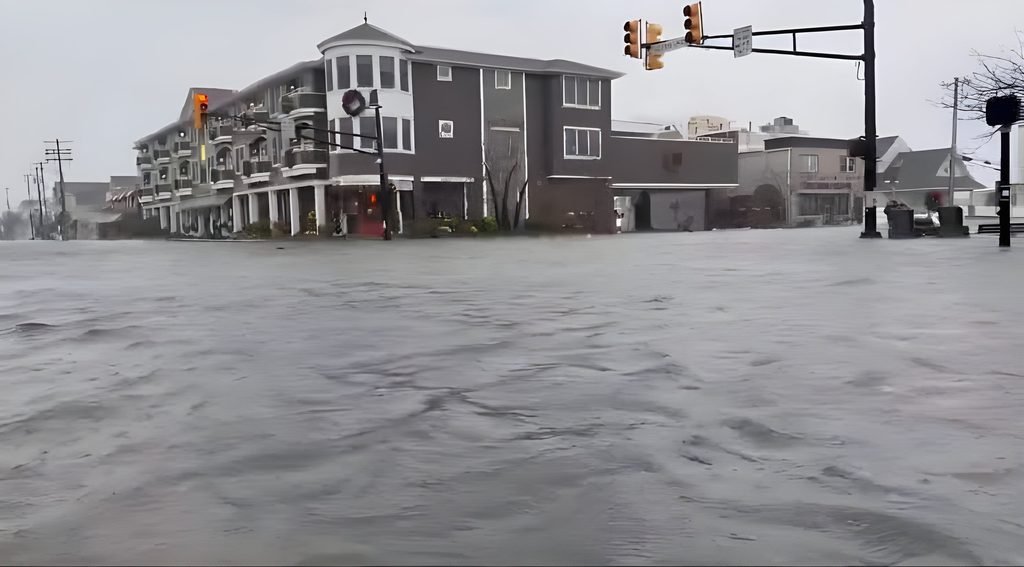
New Jersey declared a state of emergency, as did parts of New York. In New York City, Mayor Zohran Mamdani said people had to be rescued from their cars because of flooding. He urged residents to stay safe, saying there is “no destination worth your safety.”
City emergency management officials said strong winds and flooding disrupted train lines, toppled trees, and caused power outages Thursday night. Several scaffolding structures collapsed in the wind. No injuries were reported from those collapses.
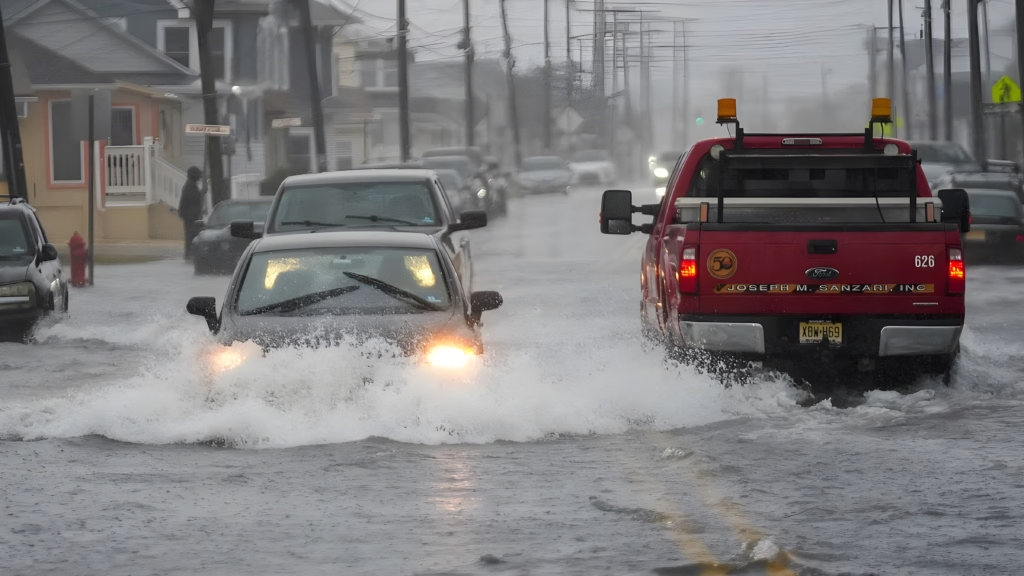
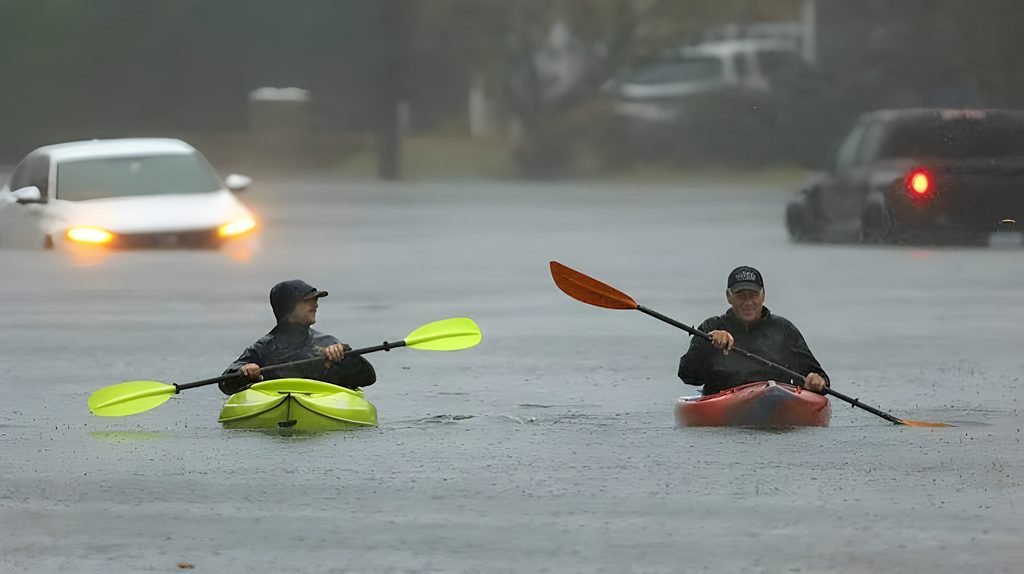
Flooding stretched from North Carolina through New Jersey as the high tide rolled in. Roads were closed and emergency crews rescued people from stranded vehicles. Scott Wahl, business administrator for Avalon, New Jersey, said the borough was seeing some of the worst flooding in its history, though he noted it was not at the level of Hurricane Sandy. A few drivers there were rescued after going around barricades into floodwater.
Residents described the situation from the ground. Lance Miller, 54, of Ocean City, New Jersey, said floodwater in his neighborhood was about a foot deep. He planned to stay home for Thanksgiving dinner, but said some friends had water inside their houses.
Closed Rods, Bridges, and Water Warmings
The storm also closed key transportation routes:
- The nearly 18-mile Chesapeake Bay Bridge-Tunnel in southern Virginia was shut for several hours Thursday morning because of high winds.
- North Carolina’s Highway 12, the only road linking Hatteras Island on the Outer Banks to the mainland, closed after seawater breached the dunes and covered the roadway.
- In Maryland, Baltimore police closed several streets Thursday night after storm surge flooded waterfront neighborhoods.
- Nearly 2 million water customers in Montgomery and Prince George’s counties, Maryland, were asked to conserve water because of intermittent power disruptions linked to the storm.
The weather service also posted several brief tornado warnings on Thursday, including one for a rare twister southeast of Seattle, Washington.
Power Outages and Flight Delays
According to the outage-tracking website poweroutage.us, more than 900,000 homes and businesses were without electricity Thursday evening. Most of those outages were in East Coast states. Utilities did not immediately provide restoration estimates in the AP report.
Air travel was also disrupted. FlightAware counted more than 2,200 delayed and more than 400 canceled flights involving U.S. destinations. Those figures were a snapshot from Thursday and may have changed since.
Macy’s Parade Postponed for the First Time
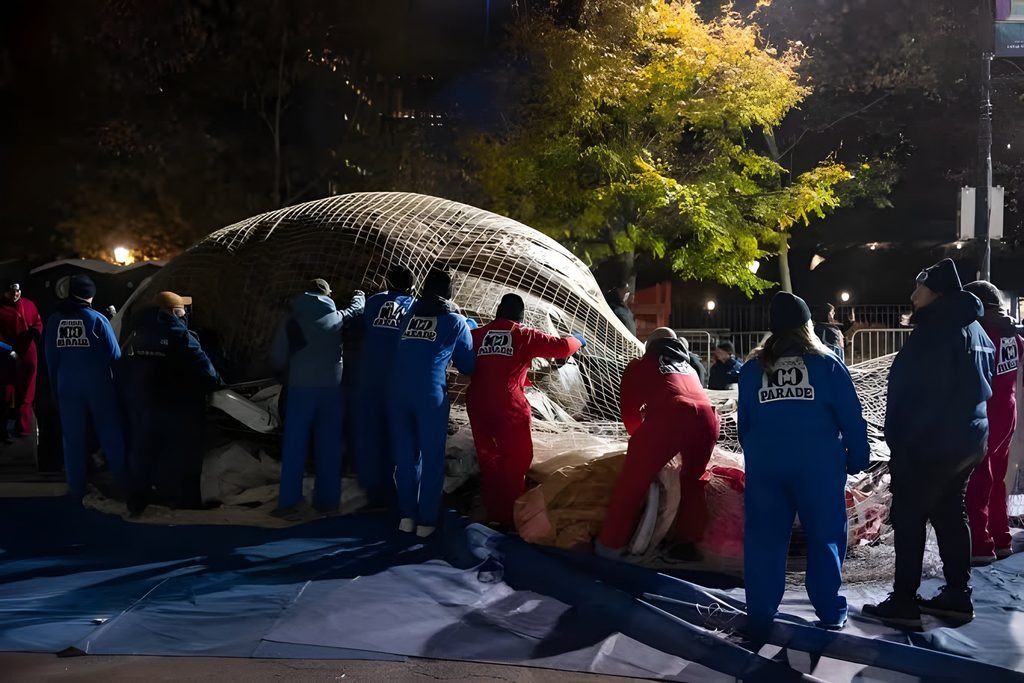
The storm forced an unprecedented change to a Thanksgiving tradition. Macy’s postponed its 100th Thanksgiving Day Parade until Saturday, November 28, because of concerns about how the giant character balloons would handle high winds between Manhattan’s skyscrapers. Macy’s said the rescheduled parade will begin at 8:30 a.m. Saturday.
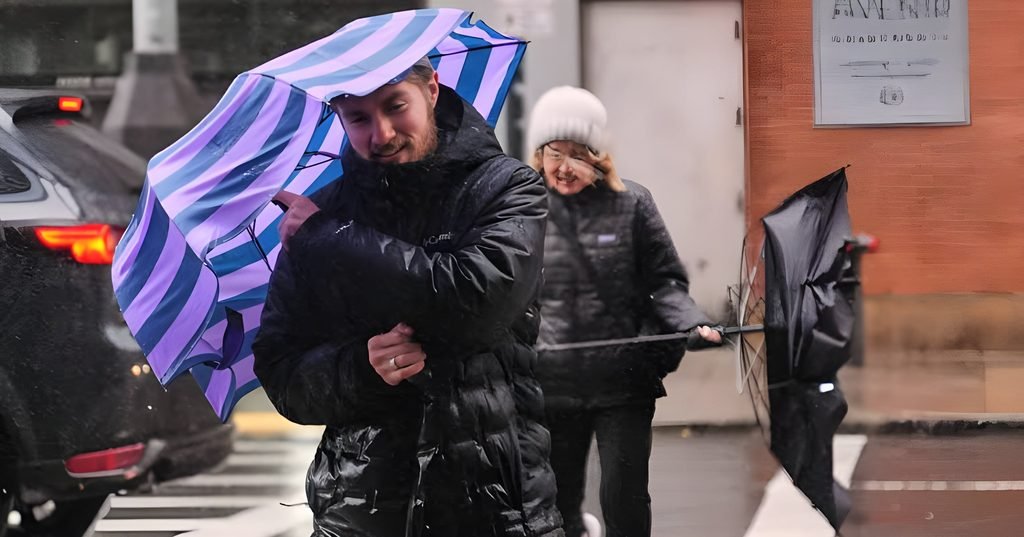
Mayor Mamdani said the decision was made together with Macy’s and the NYPD. Under New York City guidelines, large balloons cannot fly if sustained winds exceed 23 mph or gusts top 34 mph on the route. According to ABC News, the balloons had been grounded for weather only once before, in 1971, and the parade itself went on that year.
A Macy’s spokesperson said the event had been canceled in 1942, 1943, and 1944 during World War II, but never postponed for weather until this year. The New York Post reported that crews had already filled balloons with helium less than two hours before the decision.
Show in the Midwest
Farther west, cold air brought heavy snow to parts of Illinois and Missouri. St. Louis recorded 7.3 inches. Ste. Genevieve, Missouri, saw 14 inches. NOAA’s Weather Prediction Center had warned earlier in the week of a chance for significant wet snow around the St. Louis area, and a “white Thanksgiving” for the region.
In Wentzville, Missouri, the roof of an ice arena that hosts hockey and skating collapsed at about 3 a.m. Thursday. The building was empty, according to the city.
King Tides and Flooding on the West Coast
On the Pacific coast, strong winds and high-tide-driven waves caused flooding Thursday, and the National Weather Service expected the conditions to continue into Friday. Record tides forced evacuations in areas from Humboldt County in far Northern California to Ventura County near Los Angeles.
Those extra-high tides are known as king tides. In simple terms, they are especially high tides that happen a few times a year when the alignment of the sun, moon, and Earth strengthens the tidal pull. When strong storm winds and waves arrive at the same time, the water can reach farther inland than usual.
A massive wave tore part of the pier in Pacifica, California, into the ocean Wednesday. Officials had closed the L-shaped pier in the summer after finding cracks. Amtrak’s Pacific Surfliner also changed its schedules. It could not run through San Clemente because of track damage, and service was suspended between Irvine and Oceanside because of washouts from high tide.
Government Response
President Donald Trump signed a disaster declaration Thursday for Florida in response to earlier flooding that damaged hundreds of homes and required water rescues. He had approved funding earlier in the week and held a small signing ceremony with local officials at his home in West Palm Beach.
When asked about aid for the East Coast storms, Trump said his administration would look into it and had received some requests. No federal disaster declaration for the East Coast storms had been announced in the AP report.
What the Forecast Says for the Rest of the Weekend
The following outlook comes from NOAA’s Weather Prediction Center, issued on November 24. Forecasts can change, so check your local weather service office before traveling
- Friday: Heavy rain lingers over much of New England. Scattered rain and a rain-snow mix are possible across the Great Lakes and Ohio Valley. More showers and mountain snow are expected in the Pacific Northwest. The southern U.S. should be mostly dry.
- Saturday: The strong coastal storm is expected to move away from the Northeast, though showers or a rain-snow mix are likely from the Great Lakes to New England first. Rain and higher-elevation snow are expected in the central and northern Rockies.
- Sunday: Travelers heading home may need extra patience. Another Pacific storm is forecast to bring rain and mountain snow from California to Washington state. Wet roads may return to the Southeast and Florida, and the Great Lakes could see a rain-snow mix.
What Travelers and Residents Can Do
Weather officials generally advise drivers not to cross flooded roads, since even shallow moving water can be dangerous and it is hard to judge how deep it is. The mayor’s message in New York echoed that. NOAA also points people to weather.gov for local forecasts by ZIP code and to its winter weather safety tips.
If you are traveling home this weekend, check your airline’s status page before leaving for the airport and look up road conditions along your route. Amtrak riders on the West Coast should check for the latest schedule changes.
What Happens Next
Utility crews will continue restoring power in the hardest-hit East Coast states. The AP report did not give a timeline for full restoration. The Macy’s parade is set for Saturday morning, and the NYPD will have the final say on whether balloons can fly, based on wind conditions.
Cleanup is likely to take days in flooded coastal communities. Whether the federal government will issue disaster declarations for the East Coast storms remains unclear, and the AP report did not say which states, if any, had formally requested one.
How many people lost power during the Thanksgiving storms?
More than 900,000 homes and businesses were without electricity Thursday evening, according to poweroutage.us, as reported by the Associated Press. The majority of those outages were in East Coast states. The report did not provide restoration timelines.
Why was the Macy’s Thanksgiving Day Parade postponed?
Macy’s, New York City officials, and the NYPD postponed the parade because strong winds from the Thanksgiving storms made it unsafe to fly the giant balloons between Manhattan skyscrapers. It is the first time the parade has been postponed because of weather. It is now set for Saturday at 8:30 a.m.
How many flights were delayed or canceled?
FlightAware reported more than 2,200 delayed flights and more than 400 cancellations involving U.S. destinations on Thursday. Those numbers were a snapshot and may have changed as the storms moved through.
Where was flooding the worst?
Flooding hit coastal communities from North Carolina through New Jersey, including Avalon and Ocean City, New Jersey, where officials described severe flooding. Parts of New York City also flooded, and people were rescued from cars there, according to Mayor Zohran Mamdani. West Coast evacuations were also reported because of king tides.
Did the storms bring snow?
Yes. Heavy snow fell in parts of Illinois and Missouri. St. Louis recorded 7.3 inches, and Ste. Genevieve, Missouri, recorded 14 inches, according to the AP. Other parts of the Midwest and Great Lakes could see rain-snow mixes over the weekend.
What are king tides?
King tides are especially high tides that occur a few times a year when the sun, moon, and Earth line up to strengthen the tidal pull. Combined with storm winds and waves, they can push seawater well inland, as happened along the California coast on Thanksgiving.
What is the weather forecast for the rest of the weekend?
NOAA’s Weather Prediction Center said the eastern storm should move away from the Northeast on Saturday, while another Pacific storm brings rain and mountain snow to the West Coast on Sunday. Check weather.gov for updates for your area before traveling.