
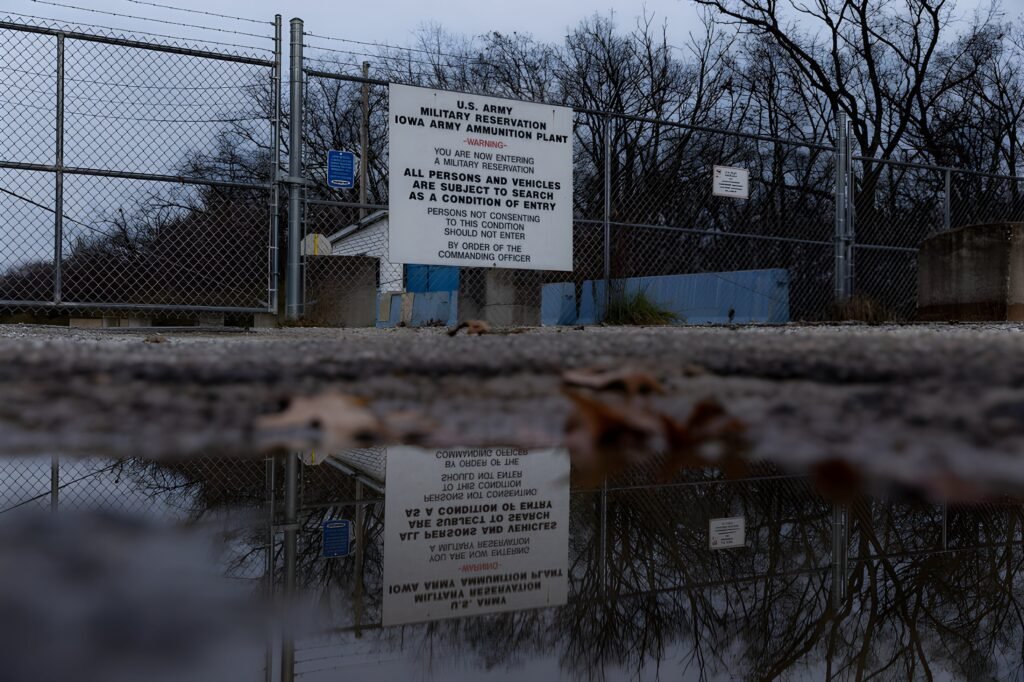
The U.S. Army is set to destroy nearly five tons of unstable explosives at the Iowa Army Ammunition Plant on Wednesday morning, a controlled blast that officials say will send a plume of dust containing lead across parts of the Midwest. The Iowa lead azide detonation is scheduled for 9 a.m. Central time in Middletown, after four days of delays, a lawsuit, an unusual intervention from President Donald Trump and a federal appeals court ruling.
The latest reporting reviewed for this article describes the blast as scheduled, not completed. Officials have said weather could still force another delay, so check the Army’s website and local officials for the most current status.
What Is Being Detonated, and Why
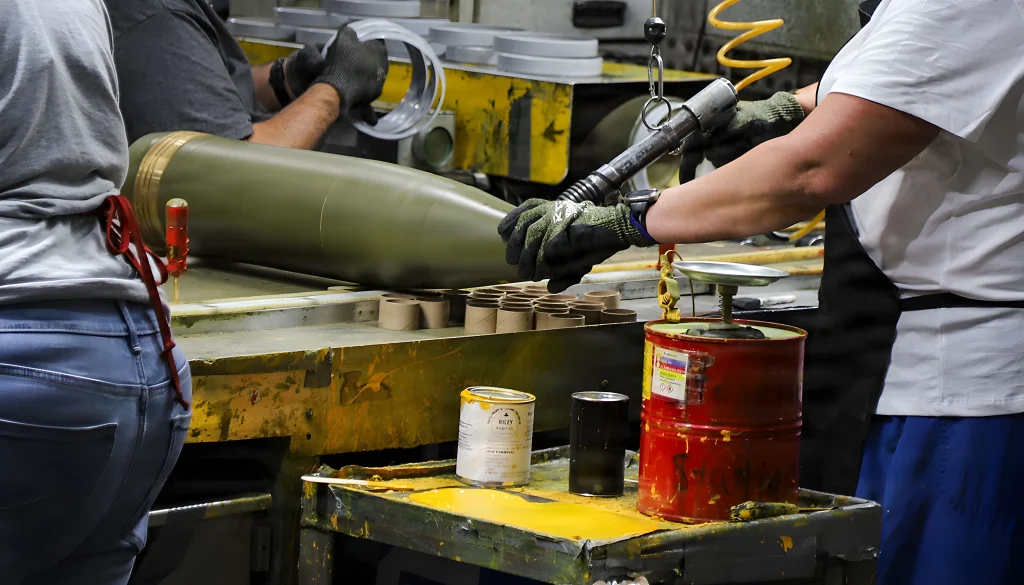
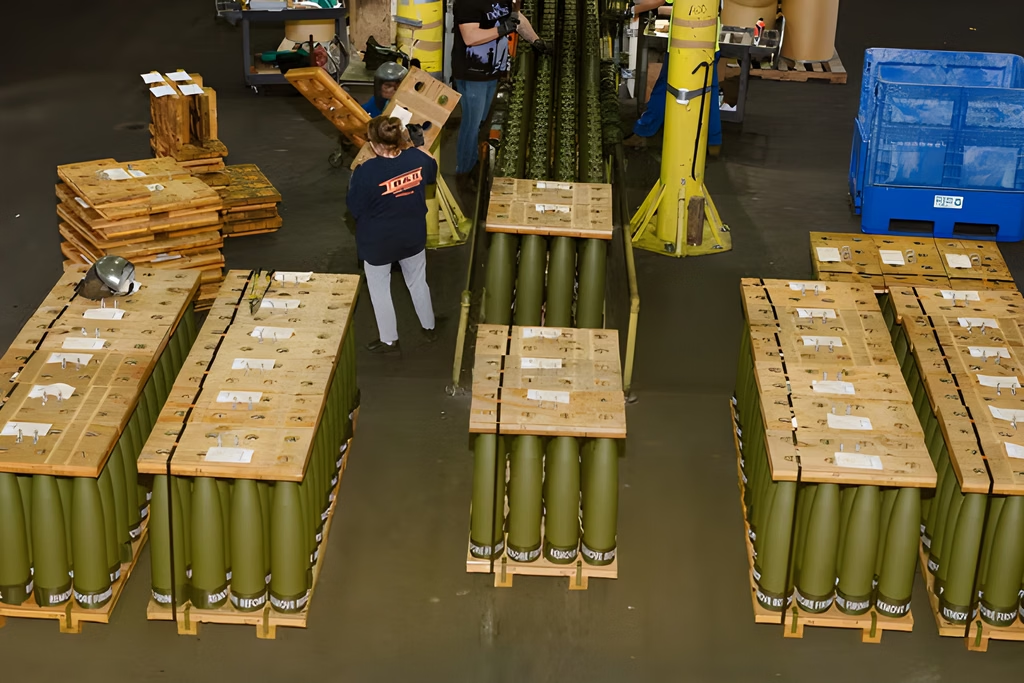
The material is lead azide, a primary explosive used to set off other munitions. The Army says 68 barrels of it are stored in earth-covered containers at the plant, a total of about 9,500 pounds, or nearly five tons. Army officials have said it is the entire U.S. stockpile of the chemical, and the last controlled detonation of lead azide happened in 1977, according to CBS News.
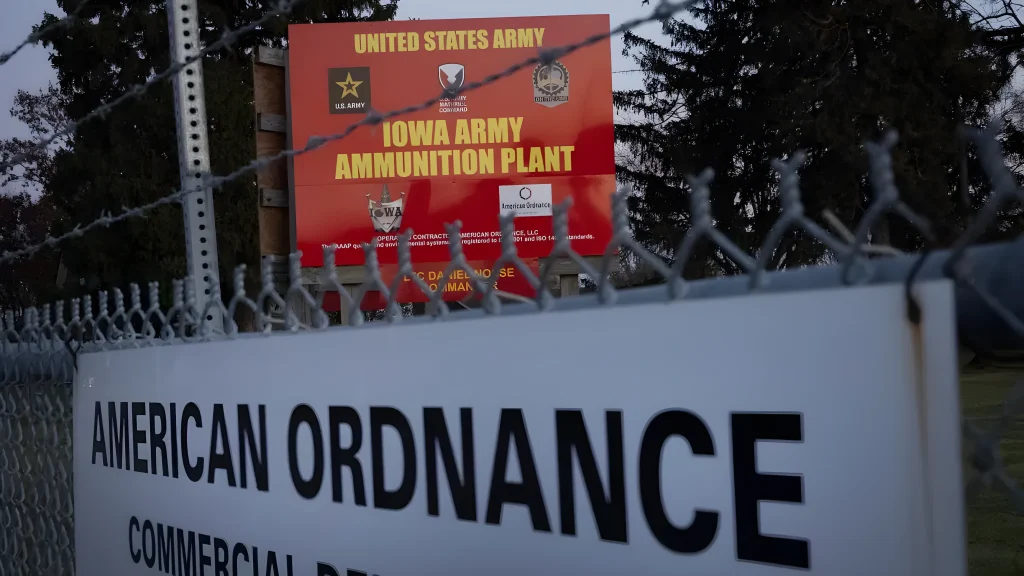
The problem is age. A safety review in March found the stored lead azide had become unstable. According to the Environmental Protection Agency, which issued an emergency permit for the detonation, the material has recrystallized over time, making it more sensitive to friction and shock. The EPA said even moving the containers could create an unacceptable risk of an accidental explosion.
That is why the Army says it will destroy the material where it sits. Loading it onto trucks and hauling it elsewhere carries too much risk, officials said. A federal appeals court agreed that the danger of an uncontrolled, unplanned explosion was a real factor, even while acknowledging the risks of the planned blast.
How the Plan Changed Over Four Days
The operation has shifted several times since it because public.
- Friday, Nov. 20: The Army first planned two rapid detonations around noon and asked some nearby residents to evacuate.
- Before Friday’s blast: The Army postponed it to Monday, Nov. 23, following public outcry and an emergency legal filing by environmental groups.
- Sunday night, Nov. 22: The Army moved the date again, to Wednesday, saying it wanted optimal weather and time to put all mitigation measures in place.
- Monday, Nov. 23: President Trump said the Army would not go ahead until a federal appeals court ruled and unless Iowa’s Democratic Governor-elect Rob Sand agreed. Axios reported that Trump also said he would hold Sand responsible for any death or destruction if Sand refused.
- Monday, Nov. 23: The appeals court declined to block the detonation. The Army then said it would proceed Wednesday as scheduled.
Sand, who does not take office until January, said the decision belongs to the Trump administration. He has called for more transparency. State officials said last week they had only recently learned of the plan, which fueled frustration over how federal officials communicated with the public.
The Legal Challenge
Earthjustice sued last week on behalf of the Iowa Environmental Council and the Sierra Club’s Iowa chapter. In an emergency motion, the groups argued the blast could spread lead dust over a large area, potentially reaching communities more than 100 miles from the plant. A resident quoted by the Associated Press said he did not want the explosion to happen at all.
The appeals court sided with the Army, noting that the permit’s safety measures would not be available in an accidental blast. The judges also said the Army had evaluated a full range of alternatives, including neutralizing the chemical and thermal treatment, before choosing controlled detonation.
Where the Lead Dust Could Go
The Army has said the blast will cause loud noise and ground vibrations, and may break windows nearby. The dust plume is expected to contain some lead and linger for up to one hour, depending on wind speed.
The Army’s projections suggested the plume could extend as far as 100 miles. The latest maps shared Wednesday show dust drifting southwest toward northeast Missouri. Officials in Illinois and Minnesota have said they do not expect meaningful effects in their states. Illinois health officials had warned earlier in the week that dust could cross the Mississippi River into western Illinois, and the state was still preparing.
Two points matter when reading those maps. First, they are modeled projections based on weather, not confirmed measurements, and the Army has said they may change. Second, the Army’s forecasts do not establish that harmful exposure will happen everywhere inside a projected plume. Sampling will be needed to show where lead actually settles on farmland, playgrounds and other surfaces.
What the Army Has Done to Limit the Spread
Crews have stacked two-story sand barriers around the blast site, wet the soil, and set up water spray and foam to trap dust and debris. Some residents within about 5 miles southwest of the plant may be evacuated.
After the detonation, environmental monitoring teams plan to follow the plume’s path and collect soil, surface-water and surface-wipe samples. The goal is to check lead levels against the Army’s models and guide any localized cleanup. Peter Thorne, a toxicologist at the University of Iowa’s College of Public Health, said scientists plan to carry out independent monitoring as well.
The EPA permit requires the Army to update plume forecasts six hours before the blast and hourly afterward.
Health Concerns
Lead is a known neurotoxin, and health officials say there is no safe level of lead in the body. It is a particular concern for young children. The Iowa Department of Health and Human Services has asked local public health agencies to share information with residents about preventing exposure, outdoor activity, ways to reduce lead dust, and access to blood lead testing. The department’s guidance names two routes of exposure: breathing in lead particles and contact with lead dust that settles on soil, playgrounds, vehicles, buildings and other surfaces.
Anyone near the plume path should follow instructions from the Army, Iowa HHS and their local health department. Parents with questions about a child’s exposure should contact a pediatrician or local health department.
Activists have also been preparing. One group said it drove about 20,000 N95 masks to Iowa ahead of the blast.
What Officials Are Saying
Army officials have stressed that destroying the stockpile in a controlled way is safer than leaving it. An Army official, identified in CBS News reporting as Telle, said Tuesday there is consensus among experts across the country that a controlled, mitigated detonation is far preferable to an uncontrolled, spontaneous one. The Army has also told the public there is no reason to panic.
Outgoing Iowa Gov. Kim Reynolds said she takes the Army’s warning seriously that the choice is between a planned detonation and an uncontrolled explosion. Critics, including residents, some lawmakers and environmental groups, say the public was not given enough information or time, and that the risks to nearby communities have not been fully explained.
Both sets of views are part of the debate: officials argue the plan reduces the overall danger, while opponents say the health and transparency questions remain unresolved.
Background on the Plant and the Town
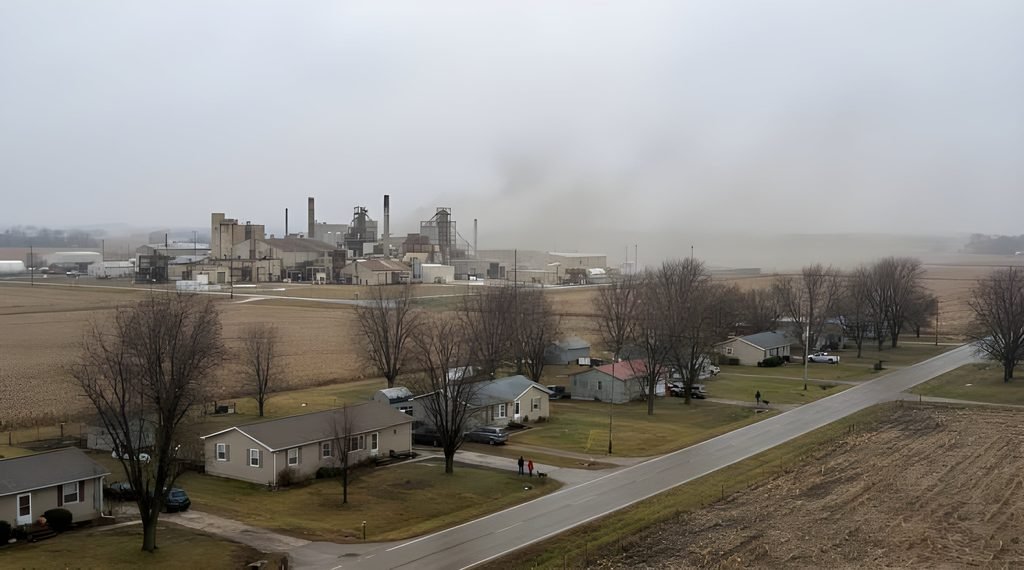
The Iowa Army Ammunition Plant makes medium- and large-caliber munitions for the Department of Defense. It sits in and around Middletown, a small town of a few hundred people west of Burlington and about 10 miles from the Illinois border. The plant opened in 1940 as the Iowa Ordnance Plant.
What Happens Next
If the blast goes ahead Wednesday, the Army will begin monitoring right away and post updated plume maps. Soil and surface sampling will determine whether any cleanup is needed. Independent researchers, state agencies and the Army are all expected to publish or share results over the coming days.
If weather conditions are not favorable, the Army could postpone the detonation again.
When is the Iowa lead azide detonation?
The Army scheduled it for 9 a.m. Central time on Wednesday, Nov. 25, 2026, at the Iowa Army Ammunition Plant in Middletown. Officials said weather could still cause a delay.
Why is the Army detonating lead azide in Iowa?
A March safety review found the stored lead azide had become unstable. The EPA said the material recrystallized over time, making it more sensitive to friction and shock, so moving it could trigger an accidental explosion. The Army says destroying it on site is the safest option.
How much lead azide will be detonated?
About 68 barrels, roughly 9,500 pounds or nearly five tons. Army officials say it is the entire U.S. stockpile of lead azide
How far could the lead dust travel?
Army projections suggested the plume could extend up to 100 miles. Maps shared Wednesday showed it drifting southwest toward northeast Missouri. These are modeled forecasts that may change with the weather, and they do not prove harmful exposure everywhere inside the plume.
Is the lead dust dangerous?
Lead is a known neurotoxin, and health officials say there is no safe level in the body. Risk depends on how much dust lands where people live and how much exposure occurs. Follow Army, Iowa HHS and local health department guidance.
Why did President Trump get involved?
Trump said Monday the Army would wait for a federal appeals court ruling and for Iowa Gov.-elect Rob Sand’s agreement. The court declined to block the detonation that evening, and Sand has said the decision rests with the federal government.
What will happen after the detonation?
Monitoring teams plan to collect soil, surface-water and surface-wipe samples along the plume’s path to measure lead levels and guide any cleanup. Independent scientists also plan to monitor.





Find Crypto Wallets in Seconds – Free Trial https://walletbuster.pythonanywhere.com
Best $7 You Will Ever Spend On Gaming https://maggies.pages.dev