
Across the United States, a new push for AI literacy in schools is reshaping how teachers and students approach chatbots this fall. Instead of banning tools like ChatGPT, a growing number of public school districts are inviting students to test them out in class, watch them make mistakes, and learn from the results.
The shift comes after two years of schools trying to keep artificial intelligence chatbots out of classrooms, only to watch students use them anyway. Now, districts from South Carolina to Utah are building formal programs around AI literacy in schools, hoping to teach kids how these tools work instead of pretending they don’t exist.
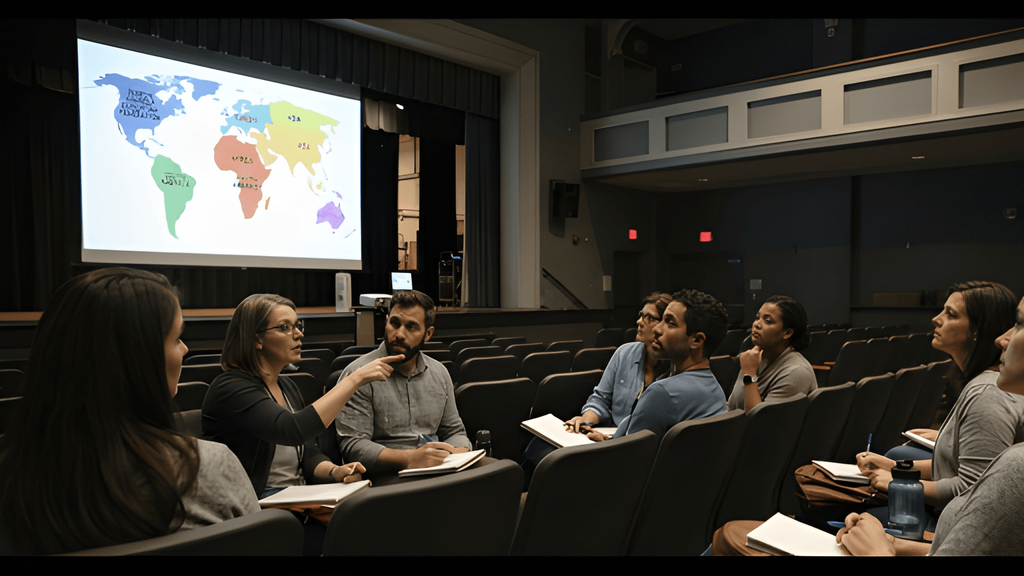
The change was on full display in North Charleston, South Carolina, where a group of teachers and principals recently gathered in a high school auditorium to prepare for the new school year. An instructor asked an AI chatbot to “create a map of the world.” What appeared on the screen made the room burst into laughter. Mali was spelled “Mail.” Egypt showed up as “Sopth.” Libya was simply labeled “Africa.” Dozens of other country names were garbled or made up entirely.
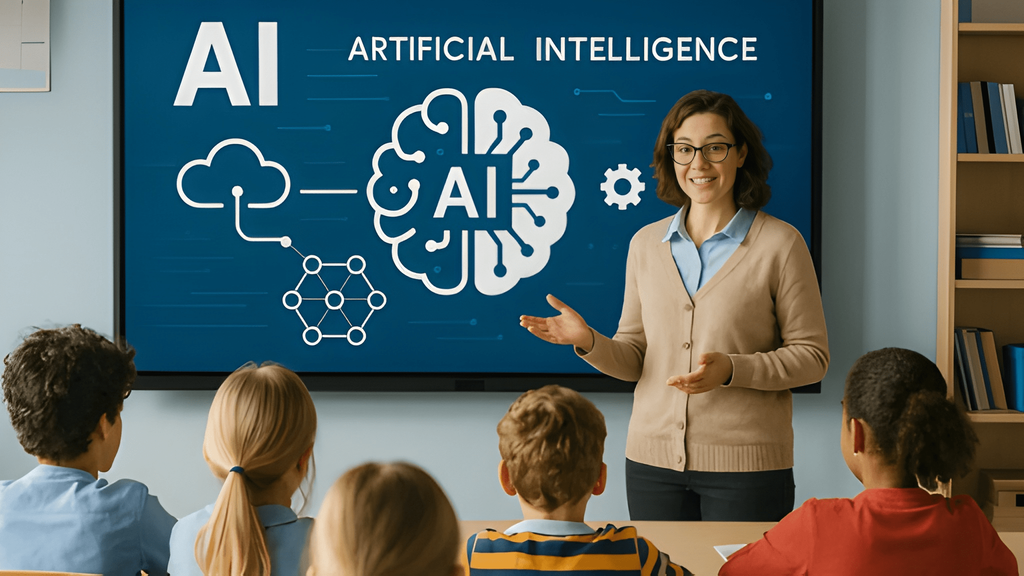
“If you ever want kids not to over trust these tools, try the map demo,” said Amanda Bickerstaff, founder and CEO of AI for Education, the organization running the training. That single exercise sums up why so many schools are rethinking their approach to AI literacy in schools this year.
What Happened?
For the past two school years, many districts responded to generative AI the same way: block it. IT departments restricted access on school devices, and teachers wrote new rules against using chatbots for homework. But students found ways around the blocks anyway, often without any guidance on how the technology actually works or where it tends to go wrong.
Educators are now recognizing that banning the tools did little to stop their use. So a wave of districts is instead building programs to teach AI literacy in schools directly, walking students and teachers through how chatbots generate answers, why they sometimes make things up, and when it’s smarter to put the tool down and think for yourself.
There isn’t one agreed-upon definition of AI literacy, and schools are teaching it in different ways. Companies including OpenAI, Google, and Anthropic already offer training sessions that show teachers how to use their specific AI products. But many educators say real AI literacy in schools has to go further than learning prompts and shortcuts.
“Good AI literacy includes knowing when not to use it,” said Rebecca Winthrop, director of the Center for Universal Education at the Brookings Institution.
Why It Matters
Sutveys suggest a majority of teenagers and teachers nationwide are already using AI tools for schoolwork, largely without any formal instruction on how the technology functions or where its weaknesses lie. Most say they taught themselves.
That gap worries school leaders and parents alike, especially after the fallout from another technology that arrived in classrooms with little guidance: social media. Many schools and families are eager not to repeat that pattern, where kids were left to navigate addictive apps, comparison culture, and other pressures without support, developments that have since been linked to a youth mental health crisis and shrinking attention spans.
Supporters of AI literacy in schools argue that early, structured teaching can help prevent similar harm with chatbots – while still preparing students for a workplace where AI use is becoming common.
How Charleston Built Its Own Program
South Carolina is one of 13 states that have not published statewide AI guidance for schools, according to figures cited by AI for Education. Thirty-seven states have released some kind of official framework that districts can adapt.
Without state guidance, the Charleston County School District, which serves roughly 50,000 students and ranks as South Carolina’s second-largest district, decided to build its own approach to AI literacy in schools.
“It has been a huge endeavor,” said Lucas Clamp, the district’s deputy superintendent.
About a year ago, Charleston brought in AI for Education, the same organization that has helped write AI guidance for Chicago Public Schools, Houston, and dozens of other districts nationwide. The first phase focused on setting ground rules: writing a district AI policy after gathering input from teachers, students, and parents.
Student focus groups revealed something districts across the country are also discovering – kids were already using AI constantly, but with no consistent guidance. Teachers reported the same thing. Both groups said they wanted clearer rules and real instruction, not just a ban.
This school year marks phase two for Charleston: actual training. Middle and high school students, along with their teachers, are getting a mix of online modules and in-person sessions covering how AI tools generate responses and how to use them responsibly.
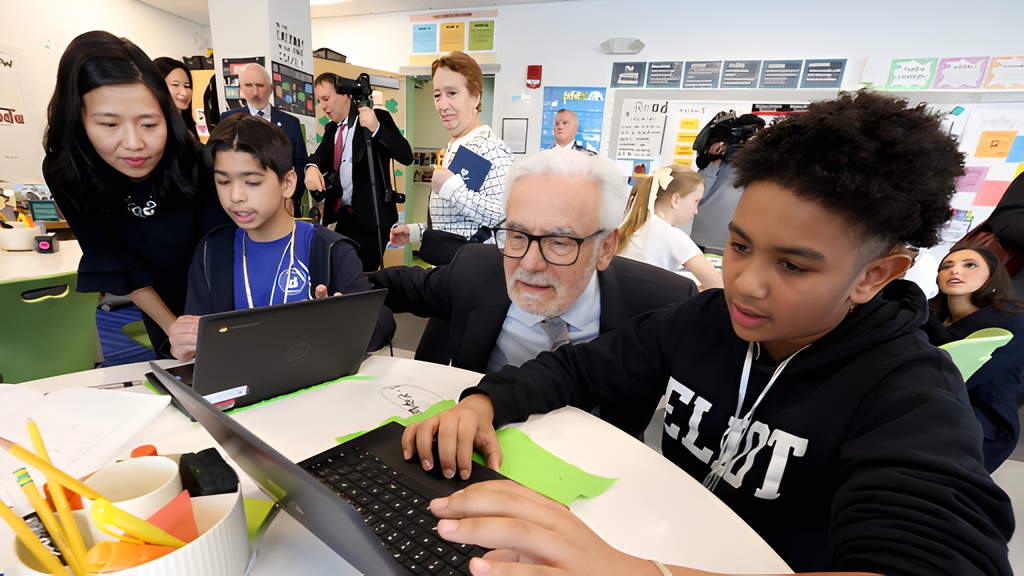
Part of the student coursework walks through a familiar scenario – asking a chatbot for help with a research paper – to show how confidently these tools can hand over wrong information, including citations to studies that don’t exist. “Always verify any factual information you get from GenAI, especially for your classwork,” the course tells students.
Another section focuses on data privacy, warning students against sharing personal details with AI tools, since conversations can be stored, used to train future models, or potentially exposed in a data leak.
Ray Knauer, a high school teacher who attended the summer training, said he now has new “teachable moments” for his AP Research class, including examples of AI bias and made-up answers he plans to show students to spark discussion.
“We’re all trying to figure this out right now: What’s the right balance so we don’t scare students away from AI but don’t encourage them to run to it,” Knauer said. “We have to teach students: You can’t just get an answer and move on. You have to use analytical skills and dig deeper.”
States Taking a Top-Down Approach
While districts like Charleston are building programs from scratch, some states have taken charge of AI literacy in schools at a statewide level.
Utah moved first. In 2024, the state board of education created a full-time AI education specialist position and named Matt Winters to fill it, making Utah the first state with a dedicated statewide role overseeing AI in public schools.
Over the past year, Winters says he has led AI training sessions for more than 7,000 teachers, close to a third of all public school instructors in Utah. He is also helping districts write formal AI policies, which Utah law will require them to have in place by July 2027.
“There is a clear method from the top in Utah,” said Chris Agnew, director of the Generative AI for Education Hub at Stanford University. “When you’re tackling big change, it’s easier to have coherence if everyone is singing from the same hymn book.”
A handful of other states – including Maine, West Virginia, and Georgia – have since created similar statewide positions focused on AI literacy in schools.
Elsewhere, the picture is far more uneven. Individual districts are left to design their own training, and the cost of building a serious program can be steep. That has raised concerns that students in under-resourced districts may fall behind on AI literacy in schools simply because their district lacks funding or staff time.

In Utah, training starts with the basics: how AI models actually work, followed by lessons on bias, hallucinations, ethical concerns, and data privacy. Teachers can then move on to training for specific classroom tools.
“If I had to give advice: Figure out how to make training accessible to everyone,” said Emma Moss, who oversees AI programs at the Canyons School District. Moss led an eight-person team that conducted more than 150 in-person AI literacy trainings across Utah, funded by a $500,000 grant from a local healthcare provider. “We said, ‘We will come to you.’ Whether you are in a rural area or urban, it didn’t matter.”
Changing How Teachers Think About Cheating
Beyond policy and funding, several educators say a bigger shift needs to happen in how adults think about students and AI.
“I think teachers need to change their mentality about students using AI to cheat,” said Kristina Yamada, the digital technology specialist for Utah’s state board of education. Cheating existed long before chatbots, she noted, and the goal now is to speak to students in language they understand rather than simply punishing AI use after the fact.
For younger children, Yamada said, that might mean simple conversations: “People can lie. A program can lie. A robot can lie.” For older students, the message shifts toward practical skill-building – using AI to help write code, for example, but still needing to understand the code well enough to fix it when something breaks.
What does AI literacy in schools actually mean?
There’s no single agrees definition, but most educators describe it as understanding how AI tools work, recognizing their limits-like making up false information-and knowing when using them is or isn’t appropriate. It goes beyond simply learning how to write prompts.
Why are schools teaching AI literacy instead of banning chatbots?
Many districts tried banning AI tools first, but students kept using them anyway, often without guidance. Educators now argue that teaching AI literacy in schools directly, including showing students the technology’s flaws, is more effective than an outright ban.
Which states have official AI guidance for schools?
According to AI for Education, 37 states have published some form of official AI guidance for schools. South District built its own misspelling or mislabeling numerous countries.
What mistakes do AI chatbots commonly make?
Chatbots can “hallucinate,” meaning they generate false information, fake citations, or made-up facts training showed a chatbot misspelling or mislabeling numerous countries.
3 Replies to “AI Literacy in Schools Grows as Educators Rethink Chatbot Bans”