The Federal Emergency Management Agency was once on President Donald Trump’s short list for elimination. Now, the man who led the agency for much of 2025 says that plan has quietly been abandoned. The story of FEMA under the Trump administration has shifted from talk of shutting the agency down to a slower, more limited effort to reform it.
David Richardson, who served as FEMA’s acting administrator through most of 2025, says he arrived at the agency with direct orders to either shut it down or dramatically shrink it. In a new interview, he says that mission no longer reflects where the administration stands. “I don’t see there being a whole lot of change,” Richardson said of FEMA’s current direction.
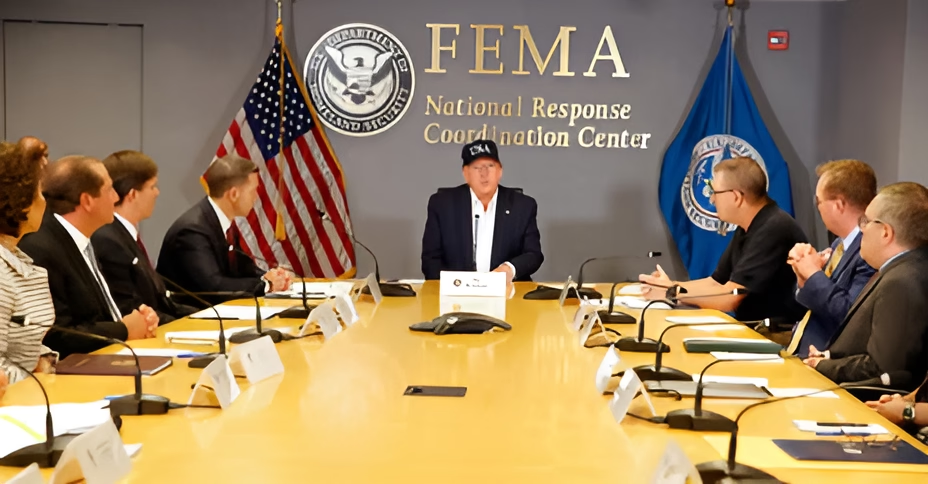
The shift matters to millions of Americans who rely on FEMA for help after hurricanes, floods, wildfires and other disasters. Here’s what’s known about how the FEMA Trump administration relationship has evolved over the past year and a half, and what it means for the future of federal disaster aid.
What Happened?
Early in his second term, President Trump repeatedly criticized Federal Emergency Management Agency, calling the agency ineffective and suggesting it should be eliminated entirely. That message was echoed by then-Homeland Security Secretary Kristi Noem, who oversaw FEMA’s budget at the time. Other federal agencies faced similar treatment during this period, including cuts to the Department of Education, Voice of America and the U.S. Agency for International Development.
Richardson took over FEMA’s top job in May 2025 with a specific goal: cut the agency’s headquarters staff from about 6,000 employees down to no more than 2,000 by November 2025, in the middle of hurricane season. He says he expected to either shut Federal Emergency Management Agency down completely or drastically reduce its size before helping prepare it for a rebrand.
That plan stalled. Department of Homeland Security leadership did not approve his October 2025 downsizing proposal, and the White House instead created a council of outside experts to study how Federal Emergency Management Agency should be reformed. By July 2025, Richardson says a DHS deputy chief of staff told him plainly that the council, not Richardson, would decide FEMA’s future. Richardson resigned from the agency in late 2025.
Why the FEMA Trump Administration Story Matters
Federal Emergency Management Agency plays a central role in how disaster survivors receive help rebuilding their lives. The agency coordinates federal response to hurricanes, wildfires, floods and other emergencies, and it distributes recovery money to individuals and states after disasters are declared.

Any serious disruption to FEMA’s staffing or operations could slow down that support at the exact moments when Americans need it most. That’s why the shift away from elimination is significant. If the Trump administration had followed through on its original plan to shrinkFederal Emergency Management Agency dramatically during hurricane season, disaster response capacity could have been seriously strained.
At the same time, the attempts to cut FEMA already caused real problems. Parts of the agency responsible for disaster recovery remain understaffed, according to current FEMA employees who spoke on condition of anonymity because they feared retaliation. A recent Government Accountability Office report also raised concerns about whether FEMA has enough staff to do its job well.
What Officials Are Saying
FEMA’s current stance, according to a spokesperson, is that “Federal Emergency Management Agency remains fully operational and focused on its core mission,” helping people before, during and after disasters. The spokesperson said the agency would not comment on details from Richardson’s upcoming book or internal personnel matters. The White House did not respond to a request for comment.
Deanne Criswell, who led Federal Emergency Management Agency for four years under the Biden administration, pushed back on Richardson’s characterization of the agency as bloated. She said cuts to Federal Emergency Management Agency cannot be made carelessly, warning that indiscriminate reductions would ultimately hurt “the person who has the most need after a disaster,” she said.
Andrew Rumbach, a disaster policy researcher at the nonprofit Urban Institute, said the original push to shrink Federal Emergency Management Agency reflected a limited understanding of everything the agency does. He said the current direction under new leadership represents the kind of improvement he’d hoped to see, compared with the more severe cuts once being discussed.
Cameron Hamilton, who was confirmed by the Senate last month to lead Federal Emergency Management Agency, wrote in an introductory email to staff that he’s looking forward to strengthening the agency for the future. Hamilton had previously served as FEMA’s acting administrator before Richardson took the job.
Background: How We Got Here
FEMA has faced political pressure from the Trump administration since the start of the president’s second term. Trump’s criticism of the agency intensified after several major disasters, and Noem, who controlled FEMA’s budget as Homeland Security secretary, echoed his calls for major changes.
Legal challenges slowed some of the administration’s early efforts. A push to end a major disaster preparedness grant program failed after a court challenge, and temporary Federal Emergency Management Agency workers who had been let go later sued the agency. This summer, Federal Emergency Management Agency began rehiring a number of employees who had previously been terminated.
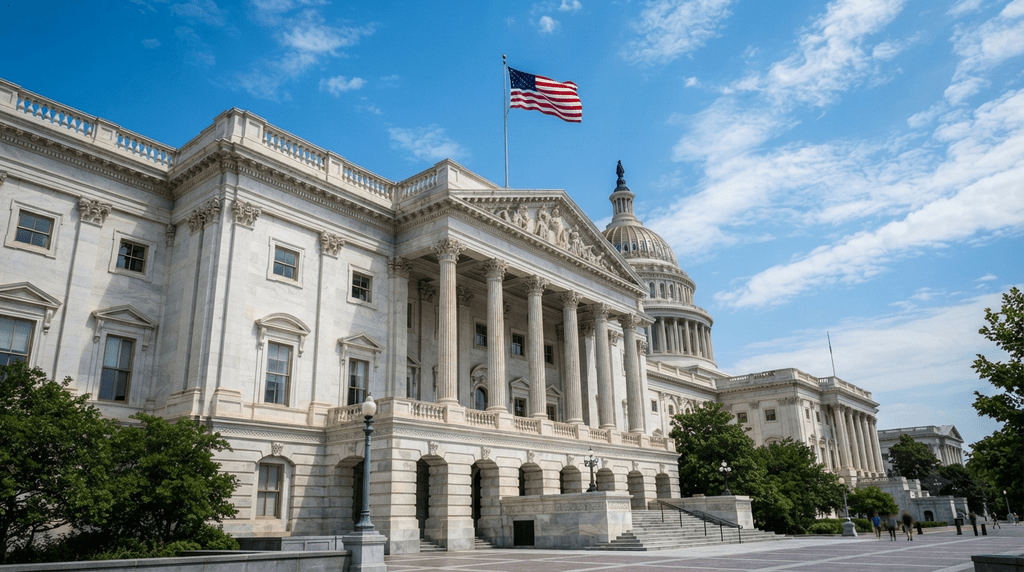
Politics around Federal Emergency Management Agency also shifted as emergency managers from Republican-led states, including Texas and Florida, spoke up about the importance of maintaining the agency during public meetings of the president’s Federal Emergency Management Agency Review Council. While those officials pushed for reforms, they stopped short of calling for FEMA’s elimination, a stance that appears to have influenced the broader conversation in Washington.
Leadership at both Federal Emergency Management Agency and its parent agency has changed substantially over the past year. Noem was fired from her Homeland Security post in March 2026 and replaced by Markwayne Mullin, a former Oklahoma senator with experience working with Federal Emergency Management Agency following major disasters in his home state. Hamilton’s confirmation as Federal Emergency Management Agency administrator followed shortly after.
Timeline: FEMA Under the Trump Administration
- Early 2025: President Trump criticizes FEMA publicly and calls for the agency’s elimination. Secretary Noem echoes those calls.
- May 2025: David Richardson becomes FEMA’s acting administrator with a mandate to shrink or eliminate the agency.
- July 2025: A DHS deputy chief of staff tells Richardson that a newly formed review council, not Richardson, will decide FEMA’s future.
- Late 2025: Richardson resigns from FEMA. His planned staff cuts for the agency’s headquarters were never approved.
- March 2026: Kristi Noem is fired from her role as Homeland Security secretary and replaced by Markwayne Mullin.
- Spring 2026: The FEMA Review Council submits its recommendations, focused on shifting more disaster response responsibility to individual states rather than eliminating the agency.
- Summer 2026: The Senate confirms Cameron Hamilton to lead FEMA. The agency announces a pilot program with Indiana meant to speed up disaster relief payments for flood repairs.
What Experts Say about FEMA’s Path Forward
Rumbach said the current approach under Hamilton, which includes targeted pilot programs like the one launched with Indiana, reflects a more measured strategy than the sweeping cuts once under consideration. He described it as the kind of change he hopes continues in the years ahead.

Still, some of the most significant reforms recommended by the FEMA Review Council, such as having the agency report directly to the president or overhauling how individual disaster survivors receive aid, would require cooperation between the White House and Congress. A bipartisan FEMA reform bill remains in committee, and the president has said relatively little publicly about FEMA in recent months, even following major wildfires and floods.
What Happens Next?
FEMA’s future now appears to rest primarily with Hamilton and the Department of Homeland Security under Mullin, rather than with the more aggressive downsizing plans pursued in 2025. The agency’s pilot program with Indiana could serve as a model for speeding up disaster aid in other states if it proves successful.
Whether Congress takes up broader reform legislation remains uncertain. For now, the shift described by Richardson suggests that, barring a major change in direction, FEMA is likely to continue operating largely intact while pursuing narrower efficiency improvements rather than facing elimination.
Is Federal Emergency Management Agency still being eliminated under the Trump administration?
No. According to David Richardson, who led FEMA through most of 2025 with a mandate to shrink or eliminate the agency, the Trump administration has moved away from that goal. FEMA says it remains fully operational and focused on helping disaster survivors.
Who is David Richardson and why does his account matter?
Richardson served as FEMA’s acting administrator for much of 2025 after previously working to cut a different Homeland Security office. He arrived at FEMA with plans to dramatically reduce its staff, but says the administration shifted course before those plans could be carried out. He has since written a book about his time at the agency.
Why did the Trump administration originally want to eliminate FEMA?
President Trump and former Homeland Security Secretary Kristi Noem both criticized FEMA as ineffective early in Trump’s second term, arguing the agency should be shut down or dramatically reformed. That rhetoric mirrored cuts made to other federal agencies during the same period.
Who leads FEMA now?
Cameron Hamilton was confirmed by the Senate to lead Federal Emergency Management Agency last month. He previously served as the agency’s acting administrator before Richardson took over. Markwayne Mullin, a former Oklahoma senator, now oversees Federal Emergency Management Agency as Homeland Security secretary after replacing Kristi Noem in March 2026.
What problems has FEMA faced because of the cuts that did happen?
Even though FEMA was not eliminated, parts of the agency responsible for disaster recovery remain understaffed. A recent Government Accountability Office report raised concerns about staffing levels, and current employees say the agency has struggled to get disaster recovery money to survivors in a timely way.
What reforms is FEMA currently pursuing?
FEMA recently launched a pilot program with the state of Indiana designed to speed up disaster relief payments for flood repairs. The president’s Federal Emergency Management Agency Review Council has also recommended shifting more disaster response responsibility to individual states, though broader reforms would require action from Congress.


Pingback: US Iran War 2026: 7 Critical Facts on Rising Conflict